
Last updated November 15, 2026
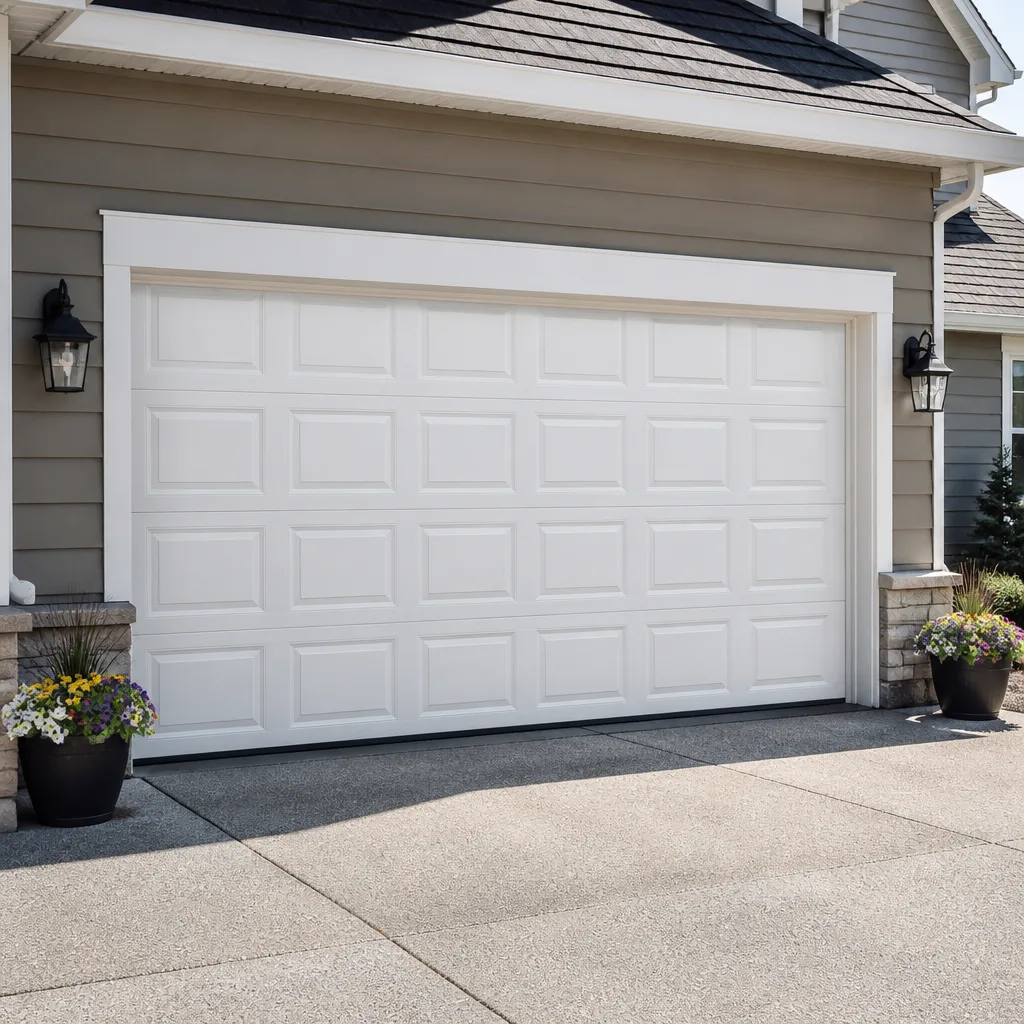 Raised-panel steel
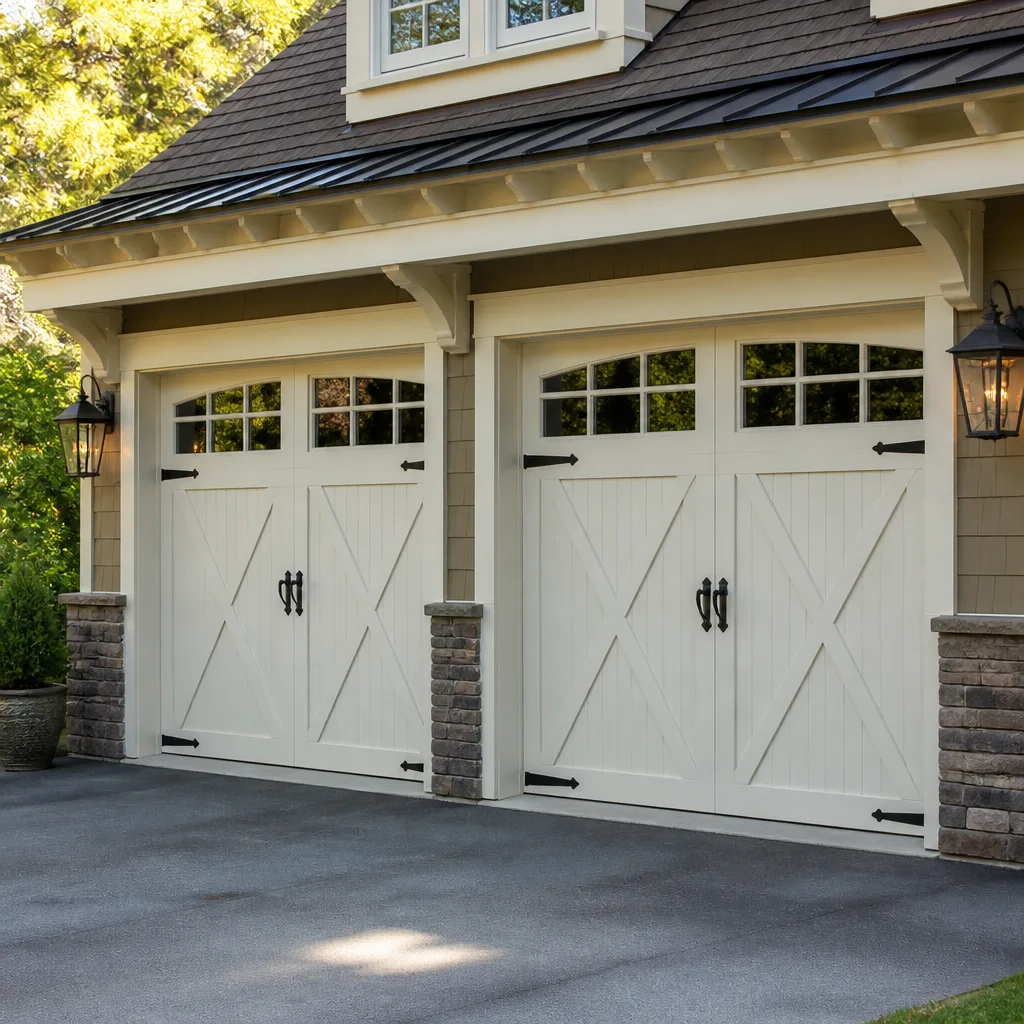 Carriage house
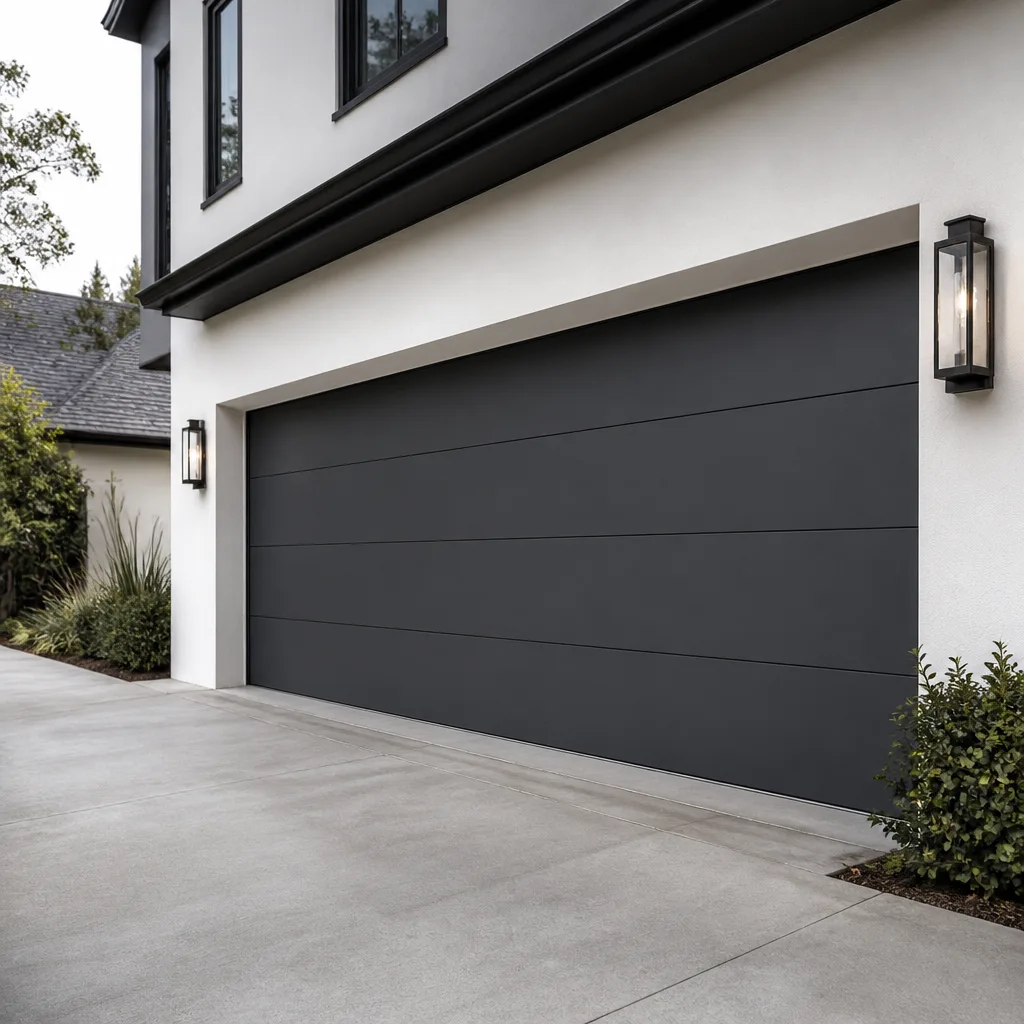 Modern flush
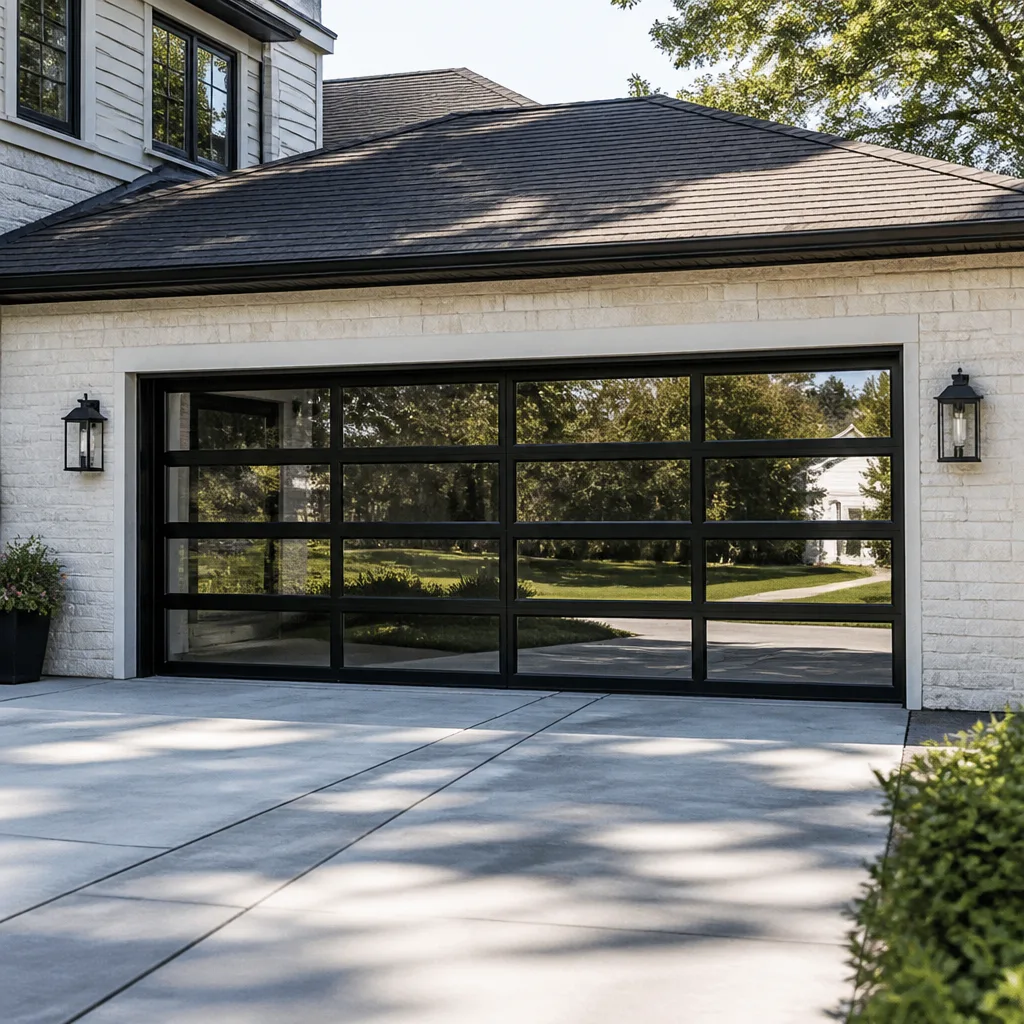 Full-view glass
 LiftMaster openers
 Chamberlain openers
Full 25-point door and opener safety check with every visit - springs, cables, rollers, tracks, and your LiftMaster or Chamberlain opener included
You get a price before we start. It does not change when the pro arrives.
Get your free estimateGarage Door Warning Signs: A Paterson Homeowner’s Reference Guide
A garage door rarely fails without telling you first. It announces trouble through sound: a specific grind, pop, or scrape that points to a specific part on its way out. The common mistake is waiting for something to look broken. By the time a panel sags or a cable hangs loose, the low-cost window has usually closed and the repair has grown into a replacement. In Paterson, where many homes run the same door and opener every day through humid summers and cold snaps off the Saddle River valley, those early sounds are easy to hear once you know what they mean. This guide maps sound to diagnosis, movement to cause, and gives you a short routine that catches most developing problems early.
Quick Answer
The main garage door warning signs are unusual sounds (grinding, popping, squealing, rhythmic clunking), uneven travel where one side lifts faster than the other, an opener that reverses without obstruction or strains on the way up, and rust or fraying on the cables and springs. Any one of these is worth a professional look before the door quits entirely. Catching them early is what keeps a small repair from turning into a full replacement.
Styles & brands we work with
- Raised-panel steel
- Carriage house
- Modern flush
- Full-view glass
- LiftMaster openers
- Chamberlain openers
Table of Contents
- The Sound-to-Diagnosis Map: What Each Noise Tells You
- Movement Warning Signs: When the Door Tells on Itself
- Reading Your Opener: Behavior That Diagnoses the Drive
- Visual Signs: What’s Urgent and What’s Cosmetic
- Your 30-Second Weekly Observation Routine
- How Paterson Weather Accelerates Wear
- Common Mistakes to Avoid
- When to Call a Professional
The Sound-to-Diagnosis Map: What Each Noise Tells You
Sound is the earliest and most reliable warning your door gives you, and each pattern maps to a different component with a different urgency. Here’s how we sort the four you’re most likely to hear in a Paterson home.
- Grinding usually points to worn rollers, dry hinges, or a track that’s out of alignment. It’s a gradual wear sound. Get it looked at within a couple of weeks; ignoring it grinds down the rollers and eventually the track.
- Popping is the one to take seriously right away. A single sharp pop from above the door often means a torsion spring is failing or has already broken a section. Stop using the door and call for help.
- Squealing typically comes from dry bearings, rollers, or the opener’s drive. It’s the mildest of the group and often the cheapest to fix, but only if you address it before the bearing seizes.
- Rhythmic clunking that repeats with the door’s travel usually indicates a loose panel, a worn hinge, or a bent track section catching a roller. It tends to worsen over weeks, so schedule it soon.
What ties these together is timing. A grinding or squealing door that gets serviced early is often a quick bearing or roller job. The same door ignored for a season can wear through a spring or a cable, and that’s when a modest repair becomes a bigger one. If a spring has already gone, that’s a job for a trained technician, not a weekend project: torsion springs store serious energy and the wrong move can cause injury. For any of these sounds, our garage door repair team can tell you exactly which part is talking.
Movement Warning Signs: When the Door Tells on Itself
Watch the door as it moves, not just as it sits. The most overlooked warning sign is uneven travel, where one side of the door lifts or lowers faster than the other. A door that lifts crooked is telling you the two sides aren’t in balance, and that imbalance almost always traces back to a cable or a spring.
Here’s what to look for during a normal open-and-close cycle:
- One side leads. If the left edge clears the ground before the right, the door is out of balance. This is a cable tension or spring imbalance signal, and it’s the point where a cable failure starts.
- The door hesitates or jerks. A pause mid-travel or a shudder suggests a binding track or a failing roller. It’s worth a look before the door stalls entirely.
- The bottom edge catches. A door that snags on the floor and reverses is a sign the travel limits or the track need attention.
- The door drifts down on its own. A door that won’t stay open is losing spring tension; that’s a spring that’s on borrowed time.
Uneven travel is one of the few signs you can catch on a normal round-trip. It’s also where we see Paterson doors slip past the easy repair: a slightly crooked door often works fine in mild weather, then the first cold morning snaps the tired cable. If you notice one side leading, treat it as an early warning rather than a quirk to live with. A garage door opener repair check can also confirm the opener isn’t masking or worsening a mechanical imbalance.
Reading Your Opener: Behavior That Diagnoses the Drive
Your opener is a diagnostic tool as much as it is a motor. Its behavior tells you whether the problem lives in the drive system or in the door itself, and knowing which brand you have makes that read more precise. LiftMaster and Chamberlain units, which share a core platform, behave similarly enough that we recognize their tells quickly; Genie systems have their own quirks. We work on all of these every day, so we know what actually fails and how to fix it right.
Three opener behaviors worth noting:
- It reverses with no obstruction. If the door goes down and reverses on its own and nothing’s in the way, suspect misaligned safety sensors or a force-limit setting that’s too sensitive. This is a safety circuit telling you to check it, not a door problem.
- It struggles on the way up but not down. This usually means the opener is fighting a mechanical load: a failing spring, a binding door, or a stretched cable. The motor is fine; the door is the problem. Forcing it just burns out the opener too.
- It responds inconsistently to the remote. Sometimes that’s a battery, sometimes a damaged sensor, and sometimes the logic board in an older unit. Brand-matched diagnostics matter here, because the fix differs across LiftMaster, Chamberlain, and Genie.
An opener that grinds, clicks repeatedly without moving, or runs but doesn’t lift the door is a drive problem, and that’s a dedicated specialty rather than a footnote on general repair. Brand-specific diagnostics, not guesswork, keep you from replacing a part that wasn’t the cause.
Visual Signs: What’s Urgent and What’s Cosmetic
Not every visible flaw is an emergency, and part of the value of a trained eye is telling the difference. Some rust is a paint touch-up; some is a door-stopper. Here’s the split we draw.
Usually cosmetic: light surface rust on the door panels, a scuffed bottom seal, minor paint fading. In Paterson’s humidity, a little surface rust on a steel door is common and can be treated with prep and paint. It’s a maintenance item, not a hazard.
Genuinely urgent:
- Rust or fraying on a cable. Surface rust on a panel is treatable; rust or broken strands on a cable is a different animal. A frayed or rust-weakened cable is holding tension and can fail suddenly. Stop using the door and get it serviced.
- A gap in a torsion spring, or a visibly broken spring. A snapped spring is an immediate stop-use situation.
- A bent or buckled track. A kinked track can drop a roller and let the door come down crooked or jam. It needs attention before the next cycle.
- Loose brackets or hinges pulling away. Metal pulling from fasteners is a structural warning, not a cosmetic one.
The cables and springs are the parts that carry the load and the parts that cause injury when they let go. That’s exactly why we say look but don’t touch: a visual inspection of a cable’s condition is safe; adjusting a cable or spring is a job for a trained technician.
Your 30-Second Weekly Observation Routine
Most developing problems give you weeks of warning, and a short routine woven into normal use catches the large majority of them early. You don’t need tools. You need about 30 seconds once a week, and a habit of actually watching the door close. Here’s the routine:
- Listen. Stand still for one full open-and-close cycle. Note any grind, pop, squeal, or rhythmic clunk and where it happens in the travel.
- Watch the edges. Confirm both sides of the door lift and lower evenly. If one side leads, note it.
- Watch the opener. Check that it moves the door smoothly without straining on the way up, and that it doesn’t reverse for no reason.
- Look at the springs and cables. From a safe distance, scan for a gap in a spring, rust or fraying on a cable, or a bent track. Don’t touch; just look.
- Test the safety reversal. Place an object in the door’s path and confirm the door reverses when it meets it. This is the one check that protects the people and pets who pass under it.
Do this once a week and you’ll hear a failing roller or a tired spring long before it stops the door. That habit is the difference between a quick fix and a scramble.
How Paterson Weather Accelerates Wear
Paterson’s climate works on a garage door year-round. Summers bring heat and humidity that dry out hinges and bearings and speed surface rust; winter swings between freezing nights and warmer days, and that freeze-thaw cycle works grease and residue loose from the moving parts. The result is a door that’s quietly wearing on a seasonal rhythm, which is why a sound that seems to come and go is actually a symptom getting worse.
Because so many homes here sit on older housing stock around neighborhoods like the Eastside and Totowa section, you’ll also find original or long-serving openers still running. Legacy units like older Craftsman models keep going far past their expected life, and they wear the way old machinery does: gradually, then all at once. That’s not a reason to replace on sight, but it is a reason to listen more closely once a week. A door that sounds normal in June can grind by October, and the same grind that was a cheap bearing job in one season can wear into a spring by the next.
With our technicians bringing up to 14 years of experience on the door and opener brands common in Paterson, we can usually tell a weather-driven sound from a hard failure just by hearing where in the cycle it lands. We also know when a sound points to the drive rather than the door, which keeps a small problem from being sold to you as a big one.
Common Mistakes to Avoid
- Ignoring a sound until the door stops. The most common mistake we see in Paterson is hearing the grind for weeks and only calling when the door quits. Early sound means an early, smaller repair.
- Assuming a noisy door needs replacing. Most sounds are worn rollers, dry hinges, or a bearing, not a door at the end of its life. Don’t replace before it’s diagnosed.
- Letting rust on a cable pass as cosmetic. Panel rust is a paint job; rust or fraying on a cable is an immediate stop-use. Homeowners mix these up and keep using a door that’s about to fail.
- Trying to adjust springs or cables yourself. These parts hold dangerous stored energy. Watching and listening is safe; touching is not.
- Forcing a door that’s struggling to open. Running the opener against a binding door burns out the motor too, turning one repair into two.
- Replacing the opener when the door is the problem. If the opener struggles up but not down, the door is the load, not the drive. Diagnose before you buy.
- Chalking up a crooked door to “settling.” Uneven travel is a cable or spring imbalance signal, and it’s the stage to catch before a cable breaks.
When to Call a Professional
Call us when you hear a pop from a spring, see rust or fraying on a cable, notice the door lifting unevenly, or find your opener reversing with nothing in the way. Those are the signs that put a door past the safe-to-run stage, and they’re where a trained technician should take over. If the door simply sounds tired but keeps working, an early look is still the cheaper path. We can also work with your insurer if a failure has caused damage. Lancaster Garage Door Service offers free estimates in Paterson: call (844) 902-2470. We answer 24/7, with fast dispatch from 7am to 7pm, Sunday through Friday. Call (844) 902-2470 and we’ll confirm the problem before any work starts, so the price you agree to is the price on the estimate.
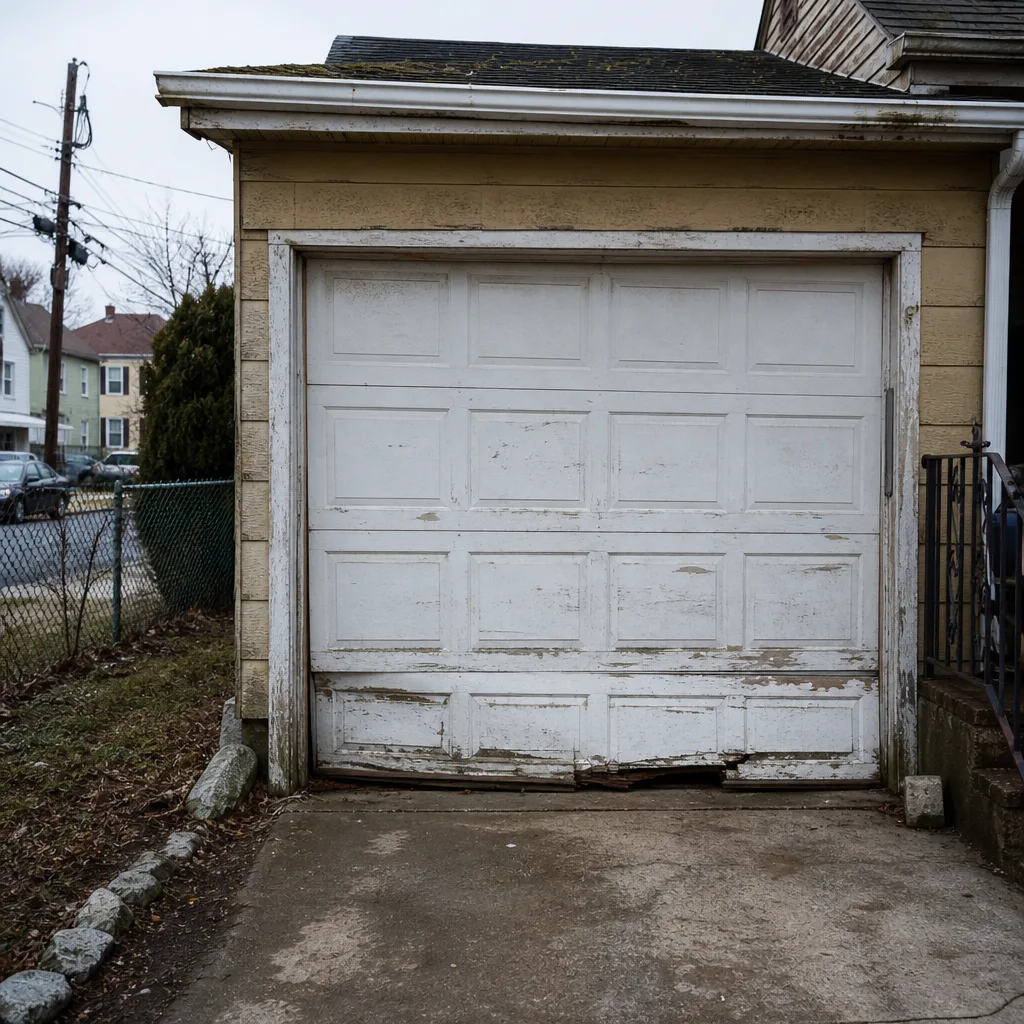
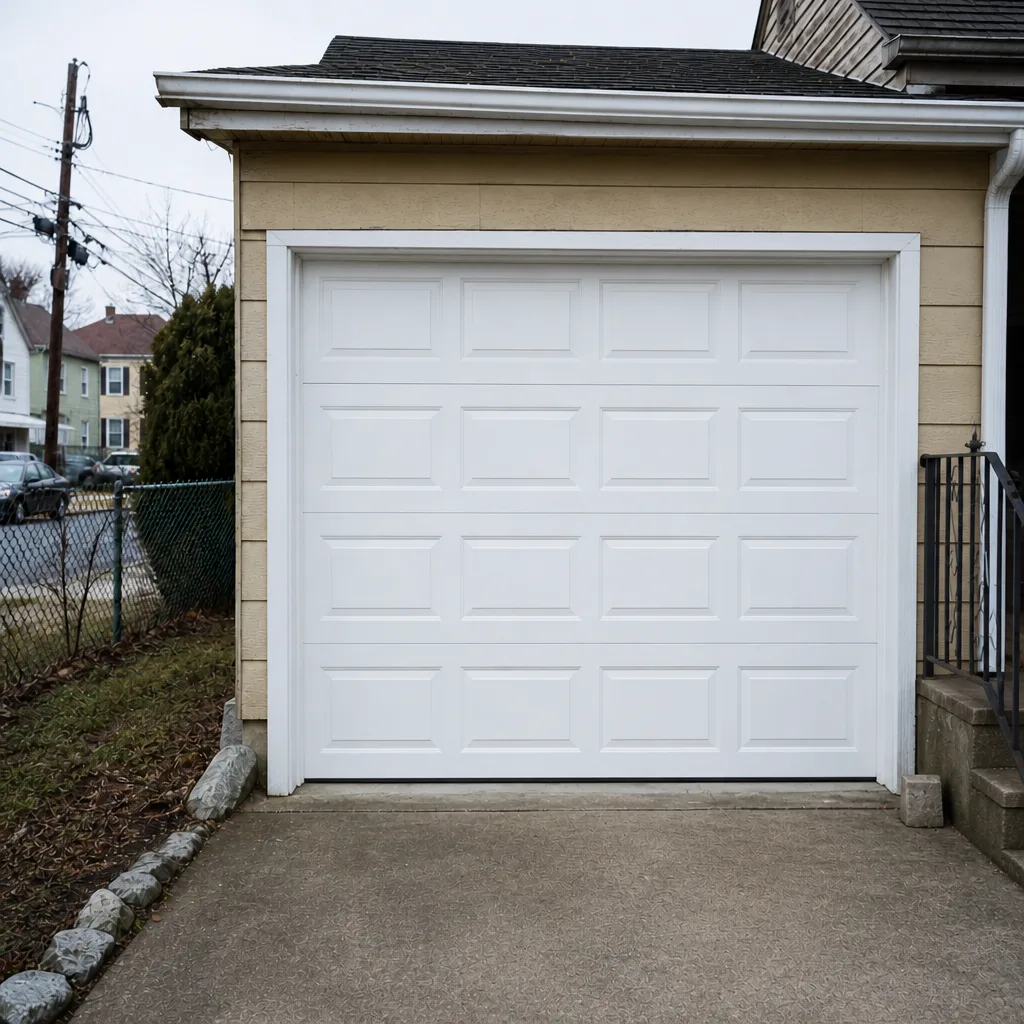
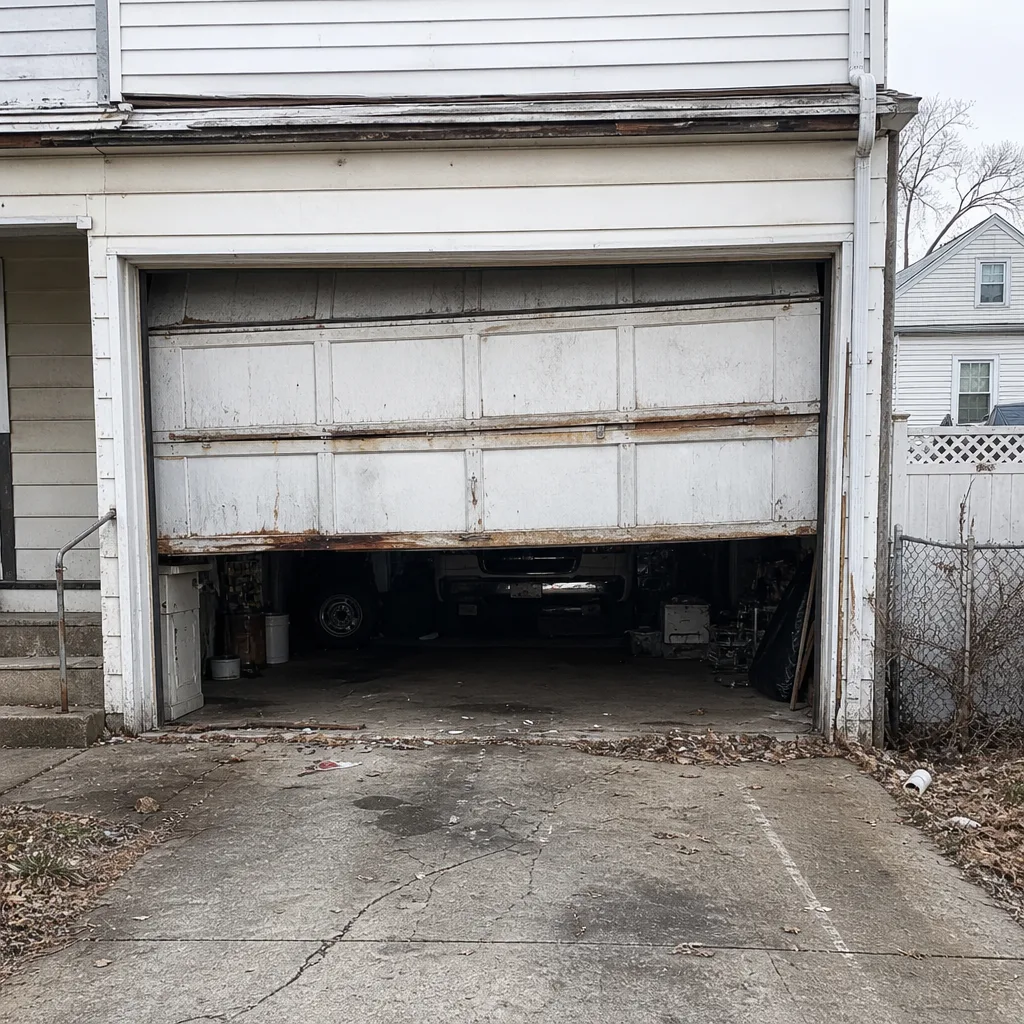
See the difference
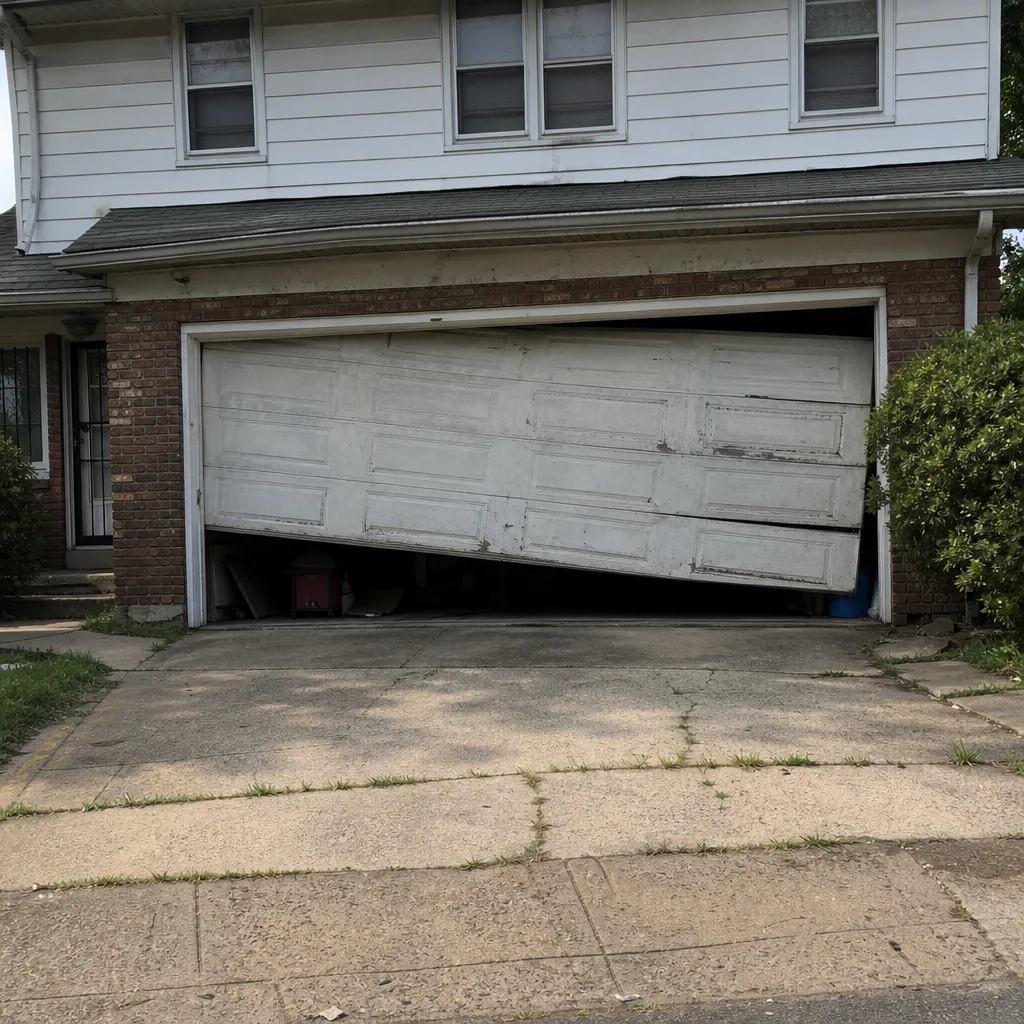 Before
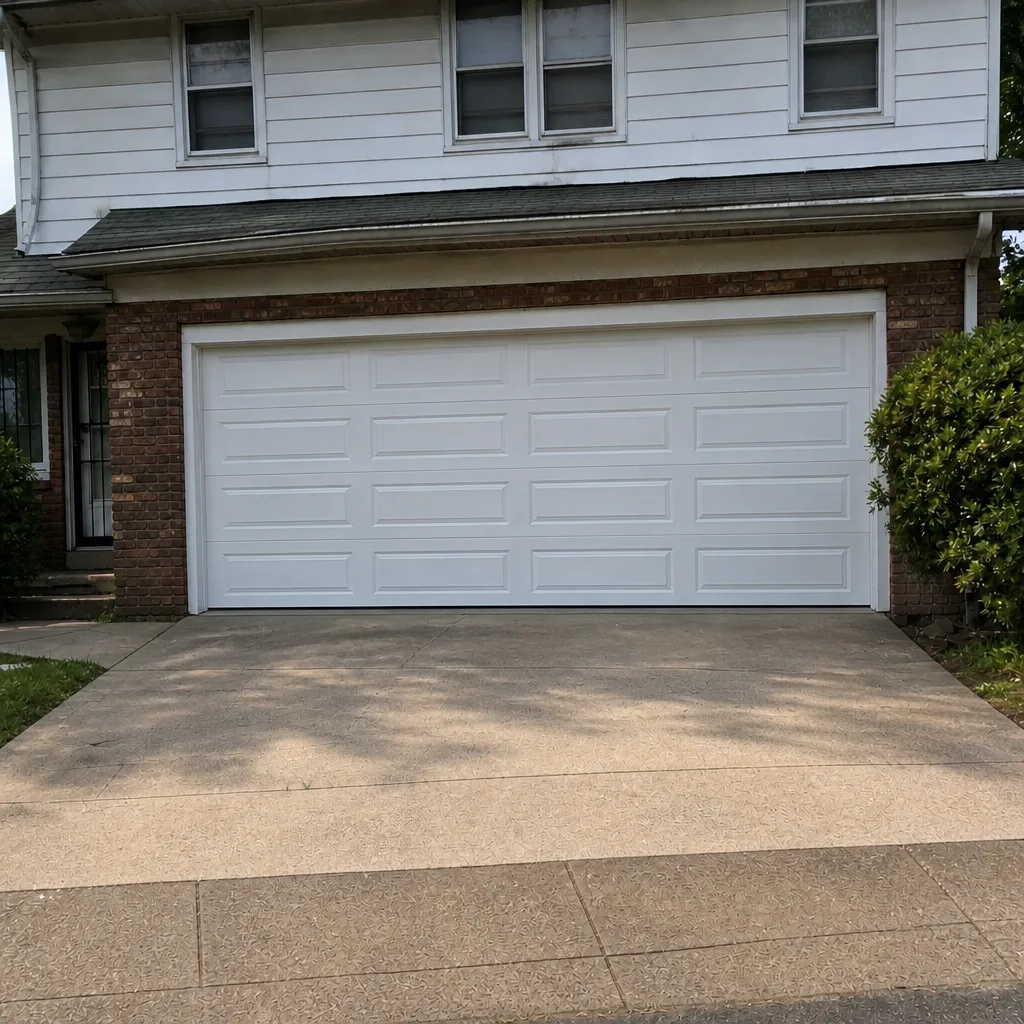 After
 Before
 After
 Before
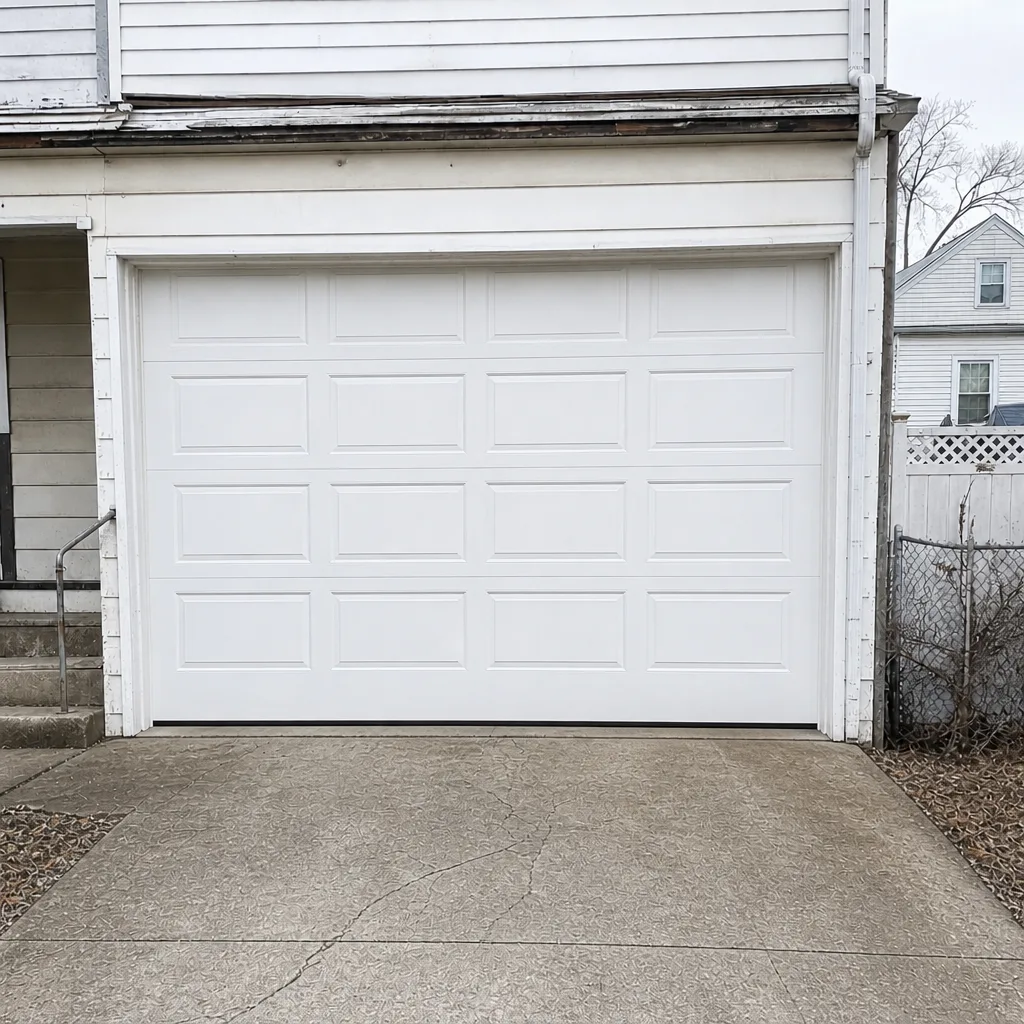 After
Frequently Asked Questions
The first warning is almost always a change in sound: a new grind, pop, or rhythmic clunk that wasn’t there before. Sound appears well before anything looks wrong, which is why listening once a week is the earliest check you have. If you hear a suspicious sound, call (844) 902-2470 for a free estimate.
A single sharp pop from above the door usually means a failing torsion spring, and that’s an emergency: stop using the door. Springs carry stored energy and can fail completely or injure someone if handled wrong. Call (844) 902-2470 and a technician will take it from there.
Uneven travel means the two sides of the door aren’t in balance, which points to a cable or spring imbalance. It’s the stage where a cable failure begins, so it’s worth a look before the door stalls or a cable snaps. Call (844) 902-2470 for a free estimate.
An opener that reverses with no obstruction usually has a misaligned safety sensor or a too-sensitive force limit. That’s a safety circuit asking for attention, not a door failure. A brand-matched check (we know LiftMaster, Chamberlain, and Genie systems well) sorts it out; call (844) 902-2470 to book a free estimate.
No. Light surface rust on the panels is common in Paterson’s humidity and is usually a treatable cosmetic issue. Rust or fraying on a cable is a different matter and requires immediate service. If you’re unsure which you’re looking at, call (844) 902-2470.
We work on both. Our technicians cover modern smart-home systems like the LiftMaster/Chamberlain myQ ecosystem as well as legacy units like older Craftsman and Raynor openers still running in Paterson homes. Call (844) 902-2470 for a free estimate and we’ll tell you what’s repairable and what isn’t.
The Bottom Line
A garage door doesn’t break without warning. The grind, the pop, the squeal, the clunk, the crooked lift, the opener that hesitates: each one maps to a part and an urgency level, and each one is easier and cheaper to fix early. Build the 30-second weekly routine into your normal use, learn what sounds point where, and treat rust on a cable as a stop, not a shrug. Paterson’s heat and freeze-thaw cycle means these checks pay off here in particular. If any of these signs shows up, Lancaster Garage Door Service offers free estimates in Paterson. Call (844) 902-2470. We answer 24/7. Fast dispatch from 7am to 7pm, Sunday through Friday.
Written by the team at Lancaster Garage Door Service.