
Last updated November 15, 2026
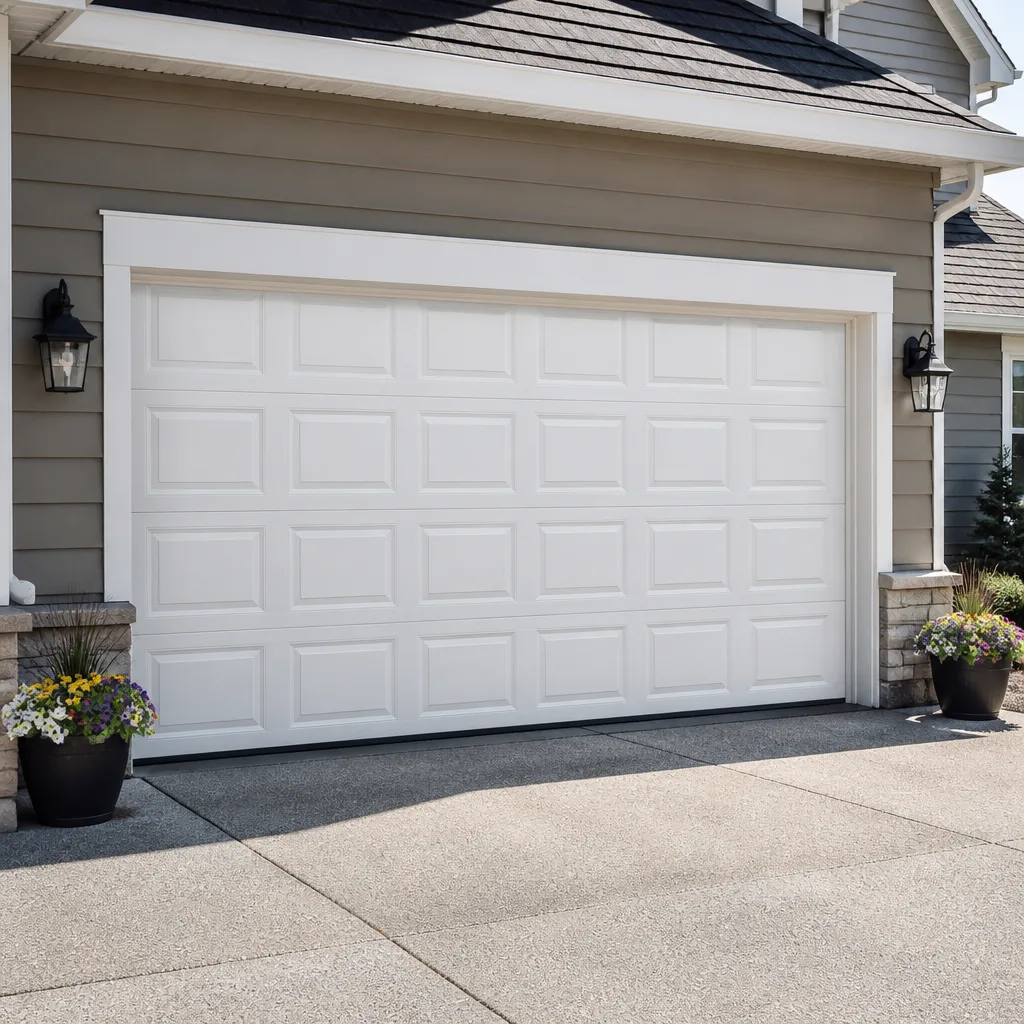 Raised-panel steel
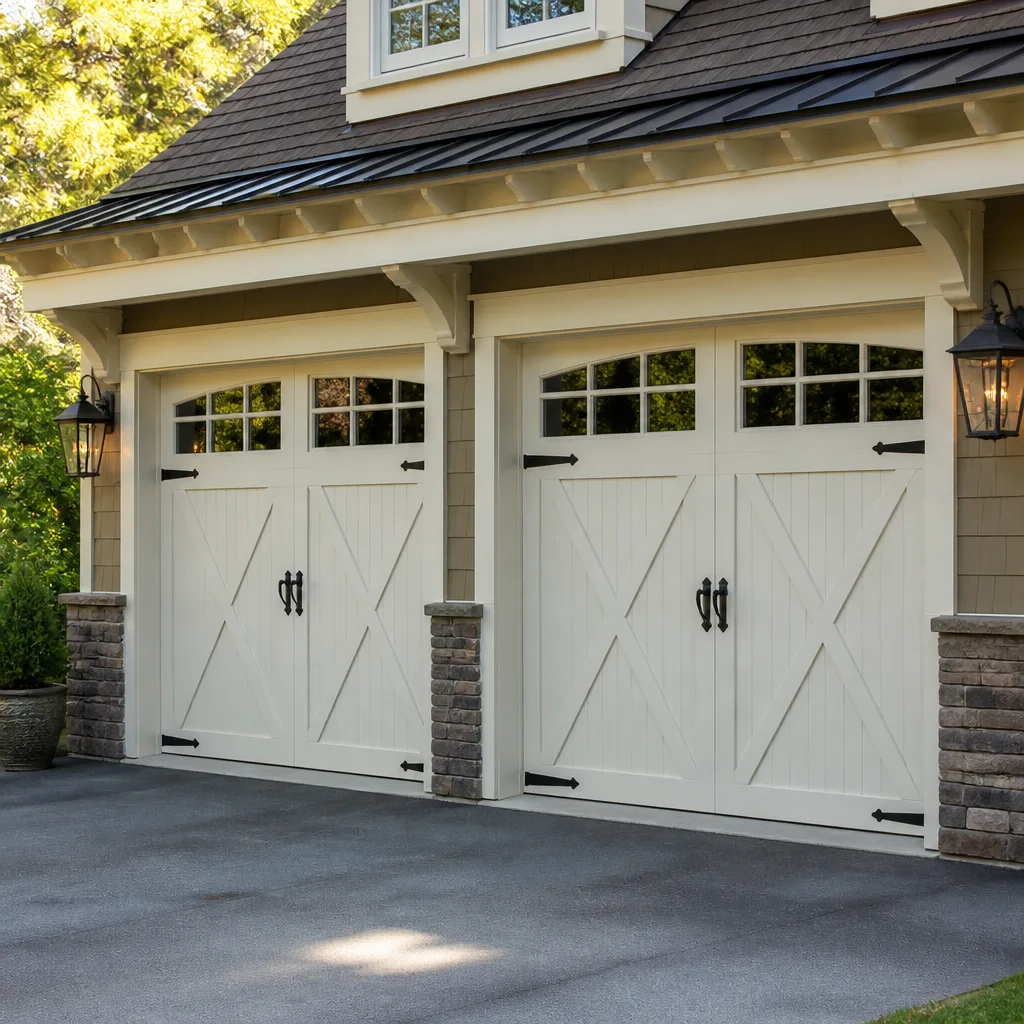 Carriage house
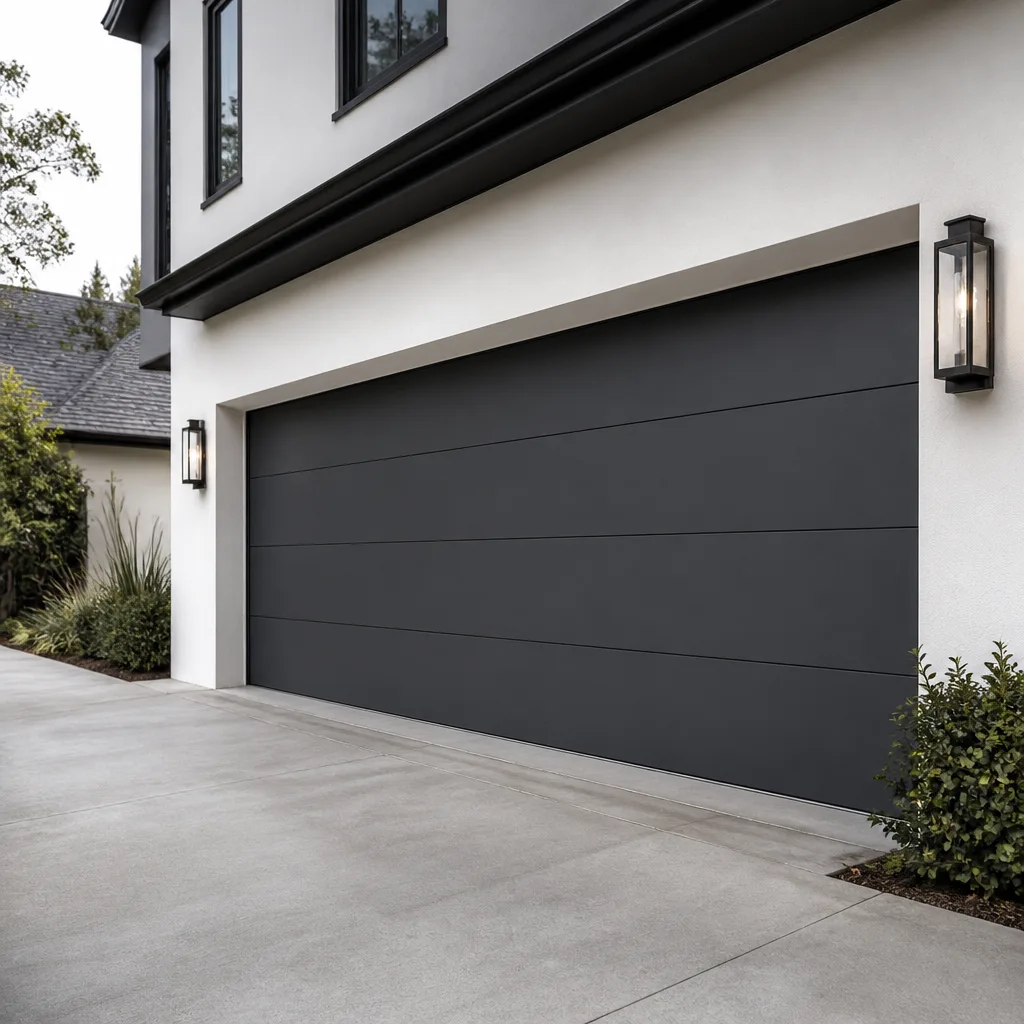 Modern flush
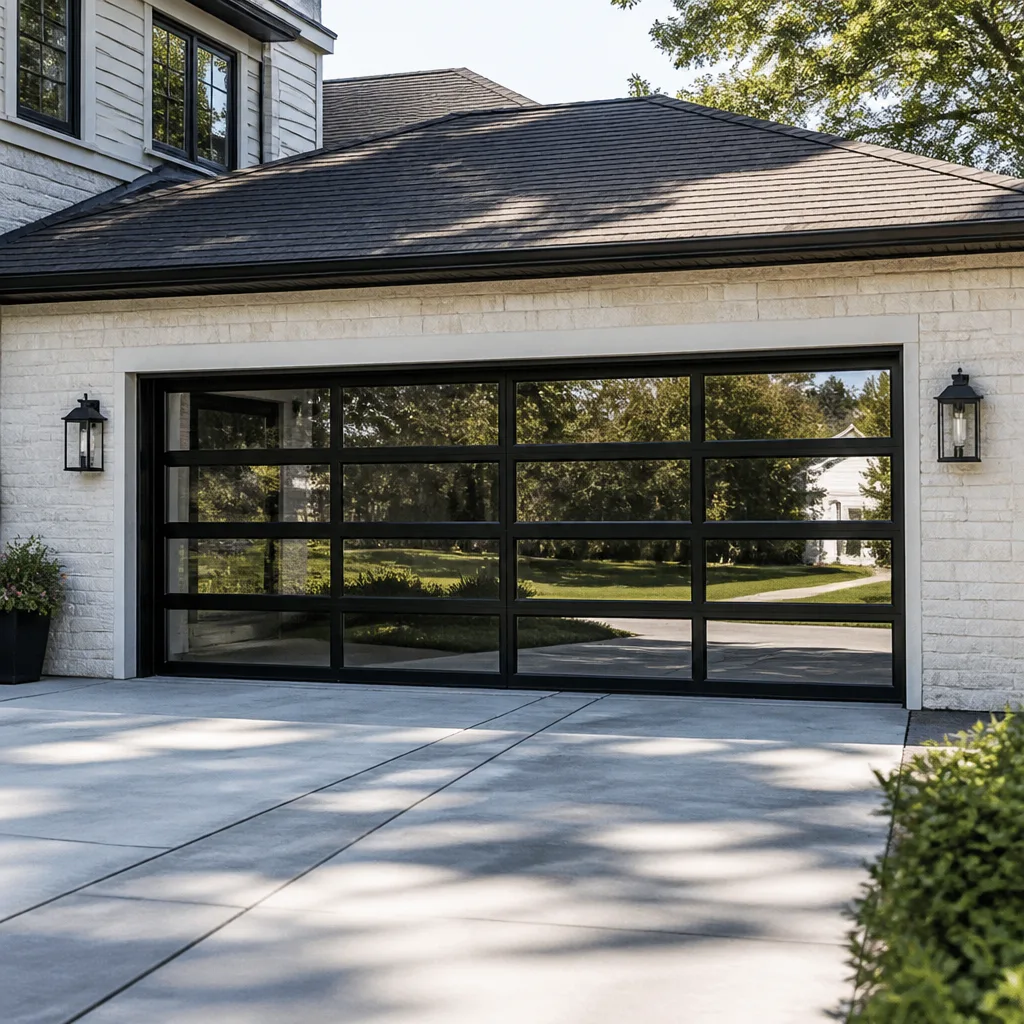 Full-view glass
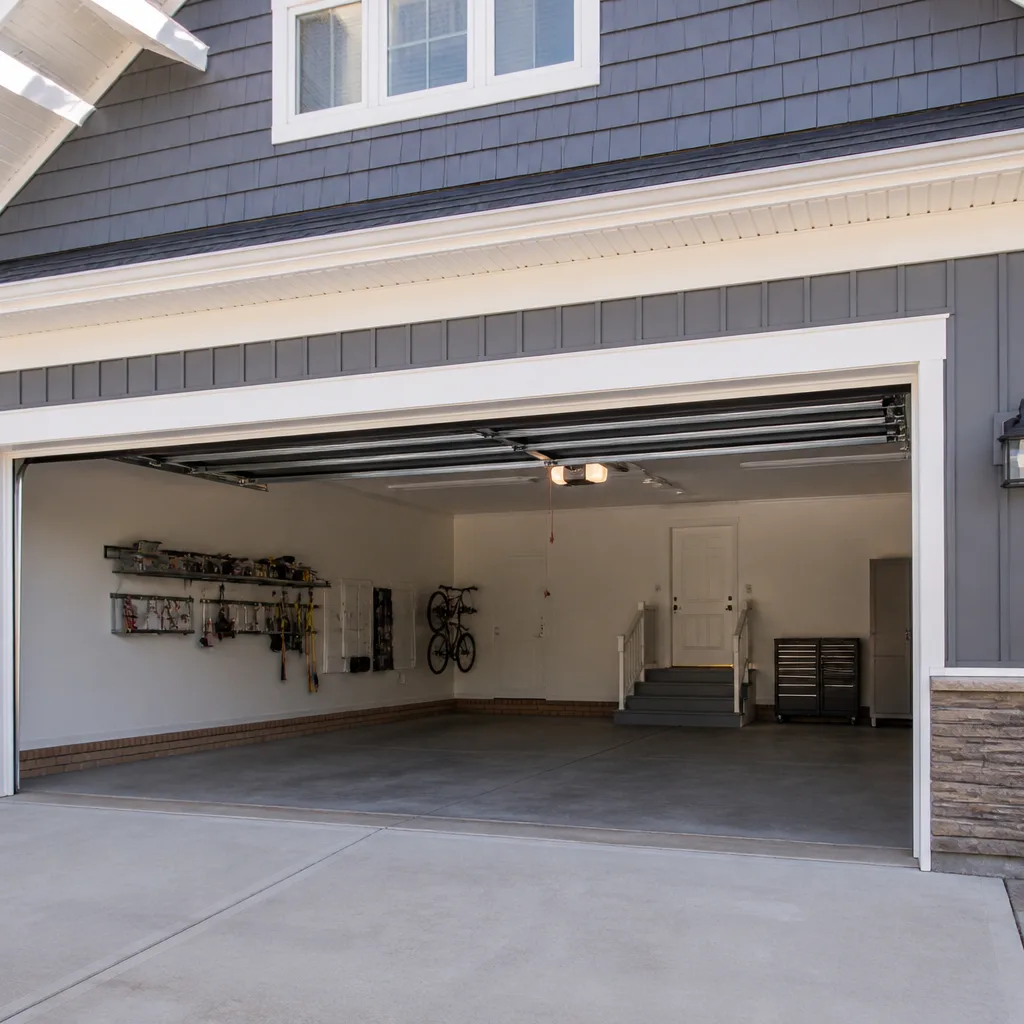 LiftMaster openers
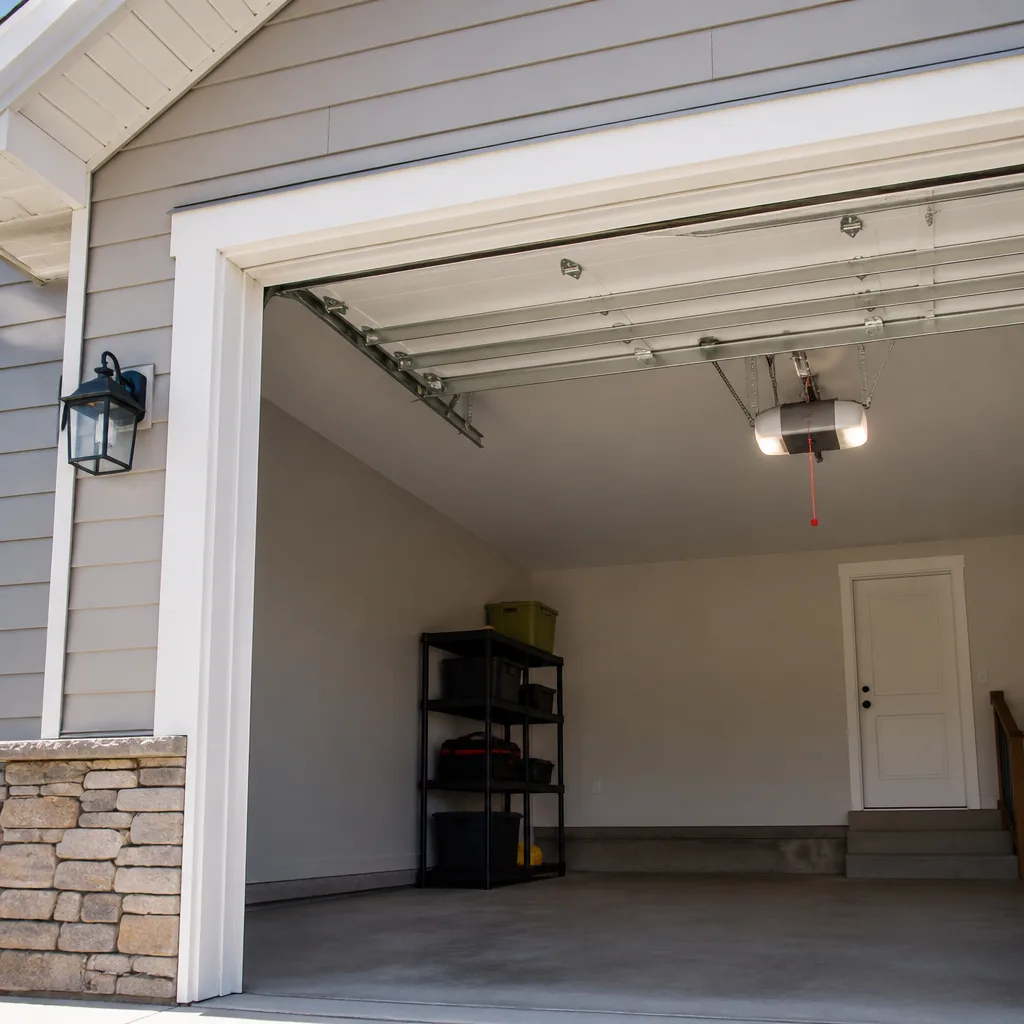 Chamberlain openers
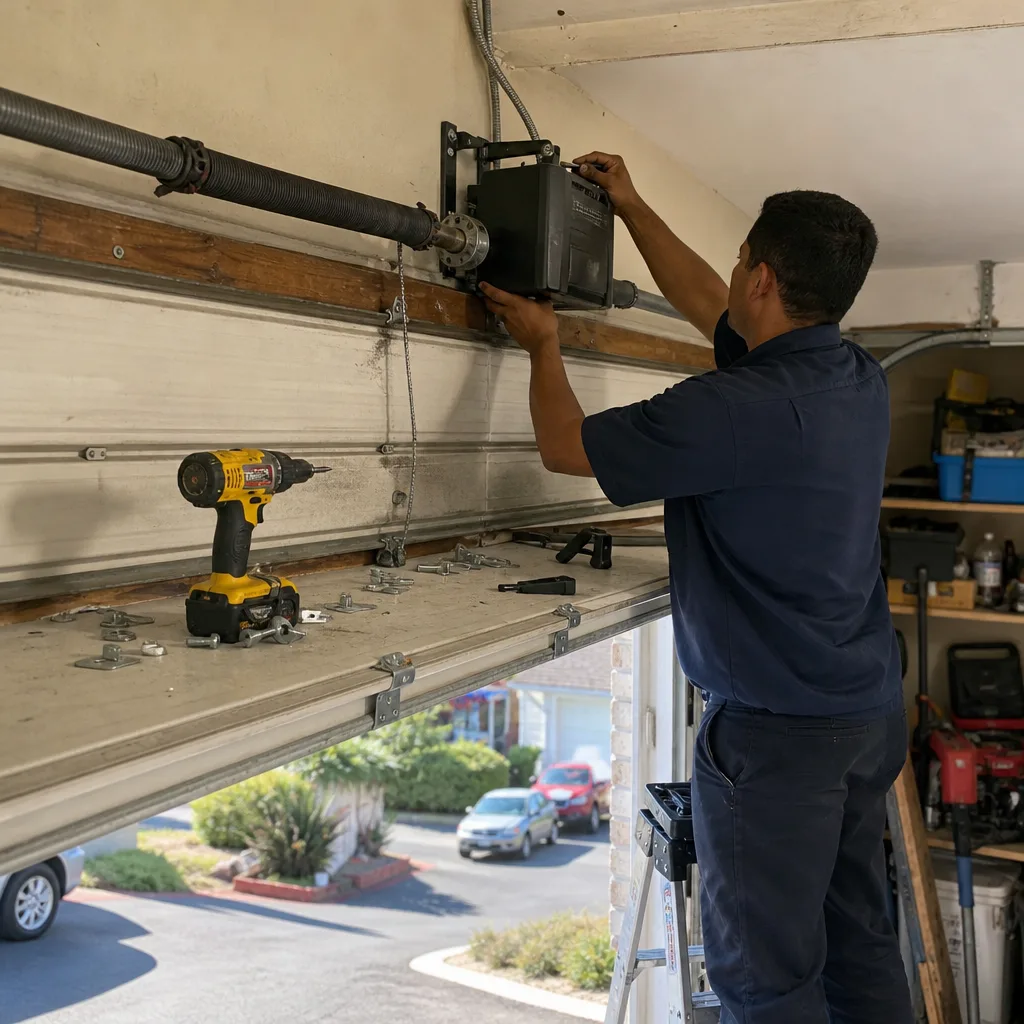
Full 25-point door and opener safety check with every visit - springs, cables, rollers, tracks, and your LiftMaster or Chamberlain opener included
You get a price before we start. It does not change when the pro arrives.
Get your free estimateThe Complete Guide to Garage Doors in Paterson
Most garage door guides are written for a three-car suburban garage with a wide driveway and a straight shot from the street. Paterson doesn’t look like that. Roughly 72,000 housing units sit close together here, and a significant share of them went up before 1960, which means non-standard rough openings, tight alleys, and attached garages that share a wall with the house next door. “Standard” advice fails in Paterson more often than contractors admit. This guide starts from the city’s actual housing stock and works outward: what you’re likely inheriting when you buy here, which door and opener configurations even fit, when repair beats replacement on an older home, and how to document what you have before you call anyone.
Quick Answer
Garage doors in Paterson need to be chosen and serviced around the city’s dense, older housing stock rather than a suburban template. That usually means measuring your actual opening before buying anything, identifying the brand and model of the door and opener you already have, and choosing repair versus replacement based on how long you plan to own the property. A licensed specialist who works on common residential brands can usually diagnose and fix a problem faster than a generalist because they recognize the system on sight.
Styles & brands we work with
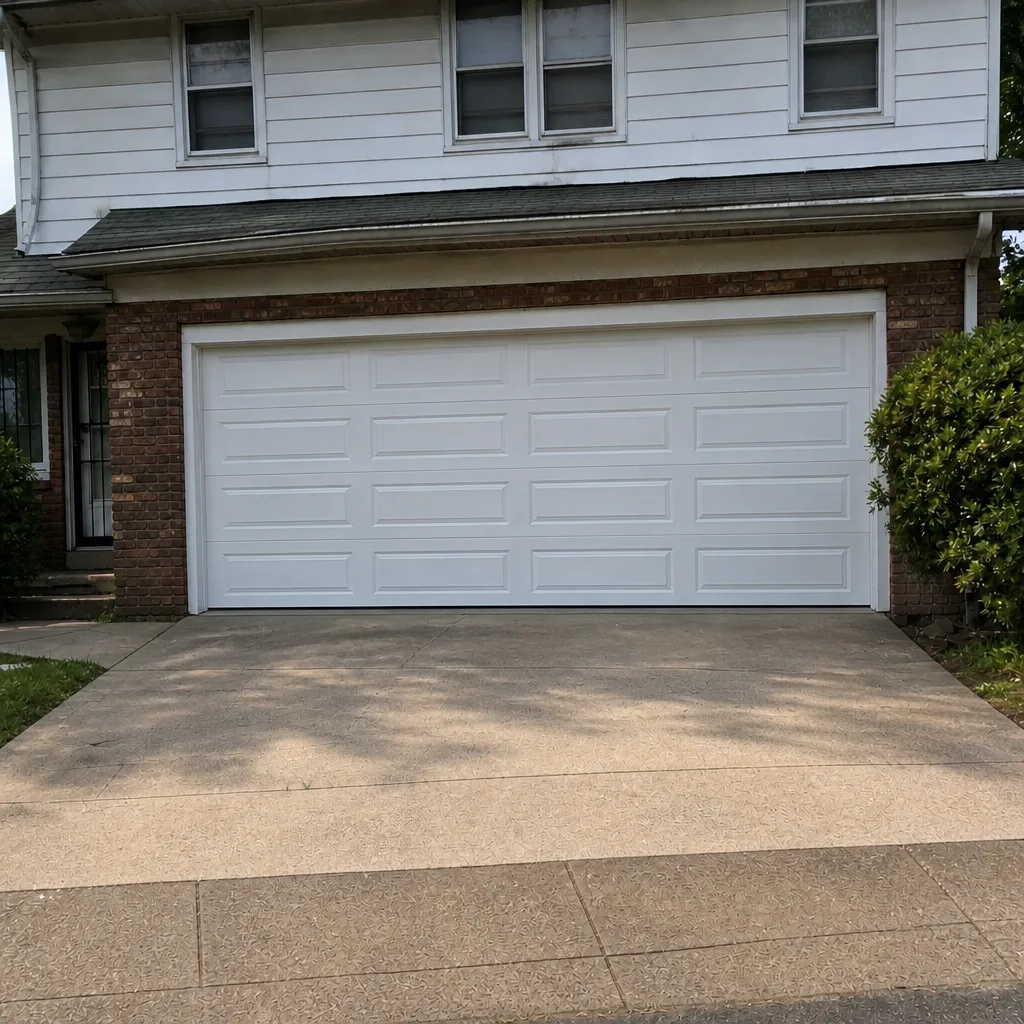
- Raised-panel steel
- Carriage house
- Modern flush
- Full-view glass
- LiftMaster openers
- Chamberlain openers
Table of Contents
- How Paterson’s Housing Stock Shapes Garage Door Problems
- Clearance, Header Height, and Why “Standard Size” Doesn’t Apply Here
- What Brands You’re Likely Inheriting, by Build Decade
- Alley Access, Shared Driveways, and Narrow Approaches
- Repair or Replace? Framing the Decision on an Older Paterson Home
- How to Document Your Door Before You Call Anyone
- Openers: Why the Model Number Matters More Than the Brand Name
- Springs, Cables, and the Parts You Should Never Touch Yourself
How Paterson’s Housing Stock Shapes Garage Door Problems
Paterson’s two-family homes, row houses, and densely packed single-families were built to fit a lot, not to accommodate a car. That single fact drives most of the door issues we see here, and it’s the reason a guide written for a suburban garage falls apart the moment you apply it to a Paterson property.
When a garage was carved into a narrow side lot or added under a second-floor addition, the builder worked with whatever opening the structure allowed. That opening is often shallower than the nominal seven-foot height a modern door expects, and the header above it may sit lower than the door manufacturer’s minimum. The result is a garage that technically holds a standard door, but only if someone shimmed the track or trimmed the top panel to make it work. Open a parts catalog without checking first and you’ll order the wrong door.
Two-family homes add another layer. In a house split between an owner and a tenant, the garage is sometimes shared space, sometimes rented separately, and sometimes converted to storage. That affects which door you actually need (an insulated door for a conditioned workshop is a different purchase than a basic non-insulated door for a car bay) and who is responsible for the repair.
- Attached garages on tight lots usually have lower ceilings, which limits the type of opener and the style of door you can install.
- Row houses may share a wall with the neighboring garage, so headroom and width are both constrained.
- Converted or shared garages often need a door that prioritizes security and weather sealing over insulation or appearance.
None of these is unusual in Paterson. The mistake is assuming you can walk into a supplier and buy a door off the rack. Measure the actual opening and the actual headroom first, then match the door to those numbers, not the reverse.
Clearance, Header Height, and Why “Standard Size” Doesn’t Apply Here
Garage doors aren’t like windows. You can’t fudge a quarter inch. The torsion spring, the track, and the top panel all depend on the door having clearance to move, and in Paterson’s older garages the clearance is often the first thing that fails.
The most common problem is low headroom. A standard sectional door needs about twelve inches of headroom above the opening for the torsion assembly and the door’s travel, and a bit more in the track and radius space at the back. On older Paterson homes the ceiling above the garage is frequently lower than that. Track-mounted spring systems, low-headroom kits, and side-mounted torsion conversions solve it, but a homeowner buying a door online won’t know that until the box is on the floor.
Width and width-to-jamb clearance matter just as much. A fifteen-foot or sixteen-foot door hung in a rough opening that was framed for fourteen feet won’t fit, and the solution is not to trim the door. It’s to choose a door that fits the opening and, if the opening is genuinely non-standard, to have it framed correctly before the door goes in. This is where a generalist contractor gets stuck and a specialist steps in: the specialist already knows which manufacturers offer flexible sizes and which configurations work inside tight Paterson lots.
- Measure the rough opening height, width, and diagonal (side to side, top to bottom, corner to corner).
- Measure headroom, from the top of the opening to the ceiling or the lowest obstruction above.
- Measure side room on both sides of the opening, and back room, from the opening to the rear of the garage.
- Check that the header above the opening is level and the wall is plumb. On older construction, both are questions worth asking.
- If a permit is required, ask your city’s building department before ordering the door, since the door and the installation must match the approved plan.
The right answer is never “make the door fit.” It’s “confirm the opening, then choose the door.”
What Brands You’re Likely Inheriting, by Build Decade
If you buy an older Paterson property, the door on it is probably older than you expect. Knowing what brand is on the door and opener tells you more about what will fail next than the year on the deed. It also tells a specialist what parts to bring.
The residential door market has been dominated for decades by a handful of manufacturers, so what you inherit generally falls into a predictable range:
- Pre-1970s construction: if the door is original, it may be a wood-panel door with a brand stamped inside one of the bottom panels. Openers on these homes, when they exist at all, are often early chain-drive units from brands like Craftsman.
- 1970s and 1980s builds: steel sectional doors became common, and so did screw-drive and chain-drive openers. Legacy brands like Raynor and Wayne Dalton show up frequently in this bracket.
- 1990s and 2000s builds: more insulated steel doors, more LiftMaster and Chamberlain openers, and a shift toward belt-drive units for quieter operation.
- Recent renovations: current-production doors from Amarr, Clopay, and similar manufacturers, often paired with a smart-capable opener that supports myQ.
What you inherit on an older Paterson home matters because repair decisions hinge on parts availability. A Craftsman opener from the 1990s may still be serviceable, but the diagnostic path is different from a modern LiftMaster unit. A Wayne Dalton door’s spring system may need a specific correction, not a generic spring swap. Brand-matched diagnostics is the whole point. We work on LiftMaster, Chamberlain, Genie, Clopay, Amarr, Wayne Dalton, Craftsman, and Raynor systems regularly, and the difference between guessing and knowing is usually a model number.
Alley Access, Shared Driveways, and Narrow Approaches
Paterson has alleys. It has shared driveways. It has garages that open directly onto a lane barely wide enough for a single car, and garages whose doors face a street at a hard angle. None of that shows up in a suburban guide, and all of it matters for door sizing and how the door swings, tilts, or rolls up.
A door that opens toward the alley has to clear the driveway apron and the parked cars behind it. If the approach is narrow, a sectional door that travels inward is the only option that works, which is why tilt-up and one-piece doors are less common here than in neighborhoods with wide driveways. Roll-up doors solve the alley problem differently: they travel vertically on a tight coil, which lets them fit an opening whose ceiling is too low for a sectional door.
Shared driveways create a different problem. When two households share an apron, a door that swings or travels outside the garage opening becomes a liability. We’ve seen configurations in Paterson where the only safe option was a high-lift or vertical-lift sectional door that keeps the entire door inside the structure, which requires headroom most homeowners don’t realize they have until they measure.
Narrow approaches also affect opener selection. A jackshaft opener mounts on the side wall and keeps the ceiling clear, which matters when the door itself needs every inch of overhead space. Chain-drive and belt-drive openers hang from the ceiling; that’s fine when there’s room, but on a tight Paterson garage it’s not the default.
The point: quote a door and an opener together, and quote them against the actual geometry of your alley, driveway, and garage interior. A single-door replacement in a suburban lot is a straightforward job. In a Paterson alley garage it’s a fit question first.
Repair or Replace? Framing the Decision on an Older Paterson Home
On an older Paterson home, the question isn’t “how old is the door?” It’s “how long will I own this property?” A door that will last fifteen years makes sense if you plan to keep the home. A door that outlasts your ownership horizon is money spent for the next owner.
Here’s the practical framing we use with homeowners:
- Repair makes sense when the door structure is sound (panels not rusted through, tracks straight, hinges intact) and the failure is in a wearable part. Springs, cables, rollers, openers, and weather seals are consumables. Replacing a spring on a door that has good bones is the right call almost every time.
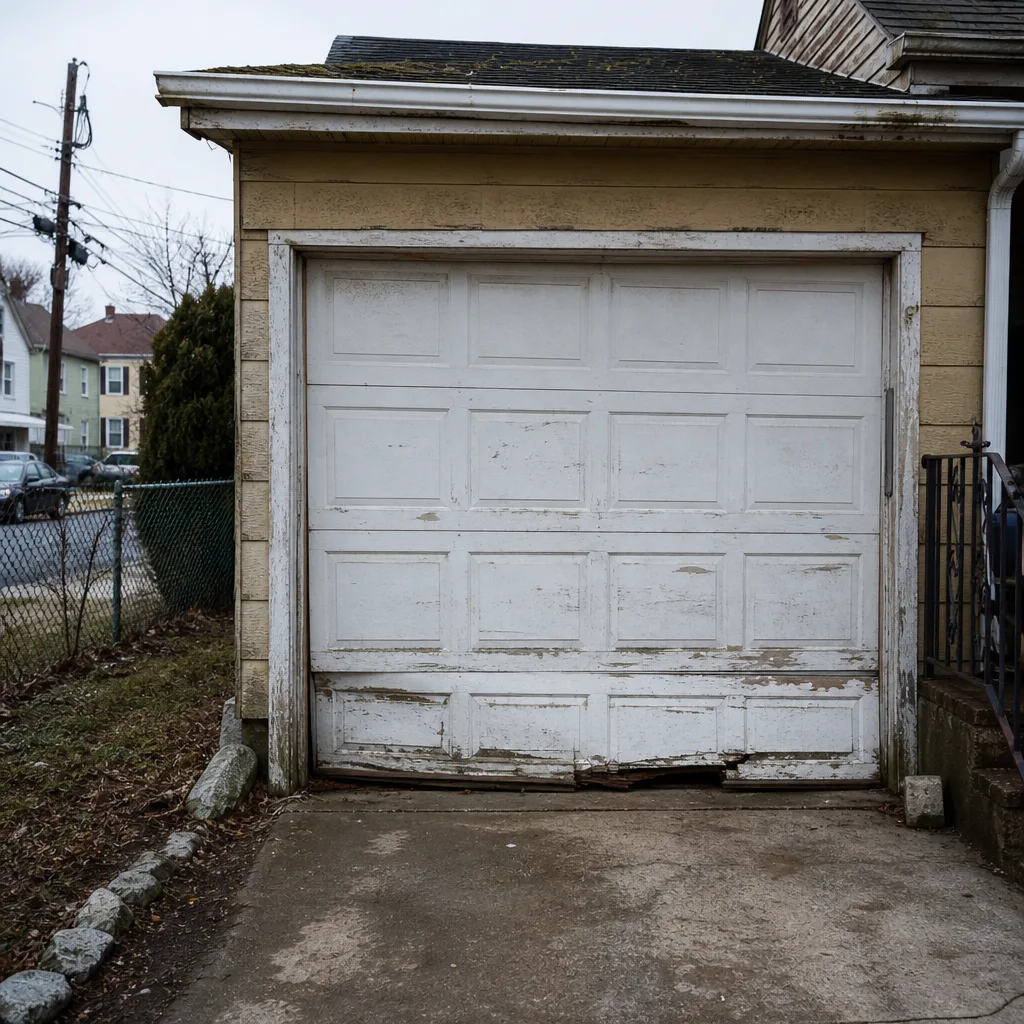
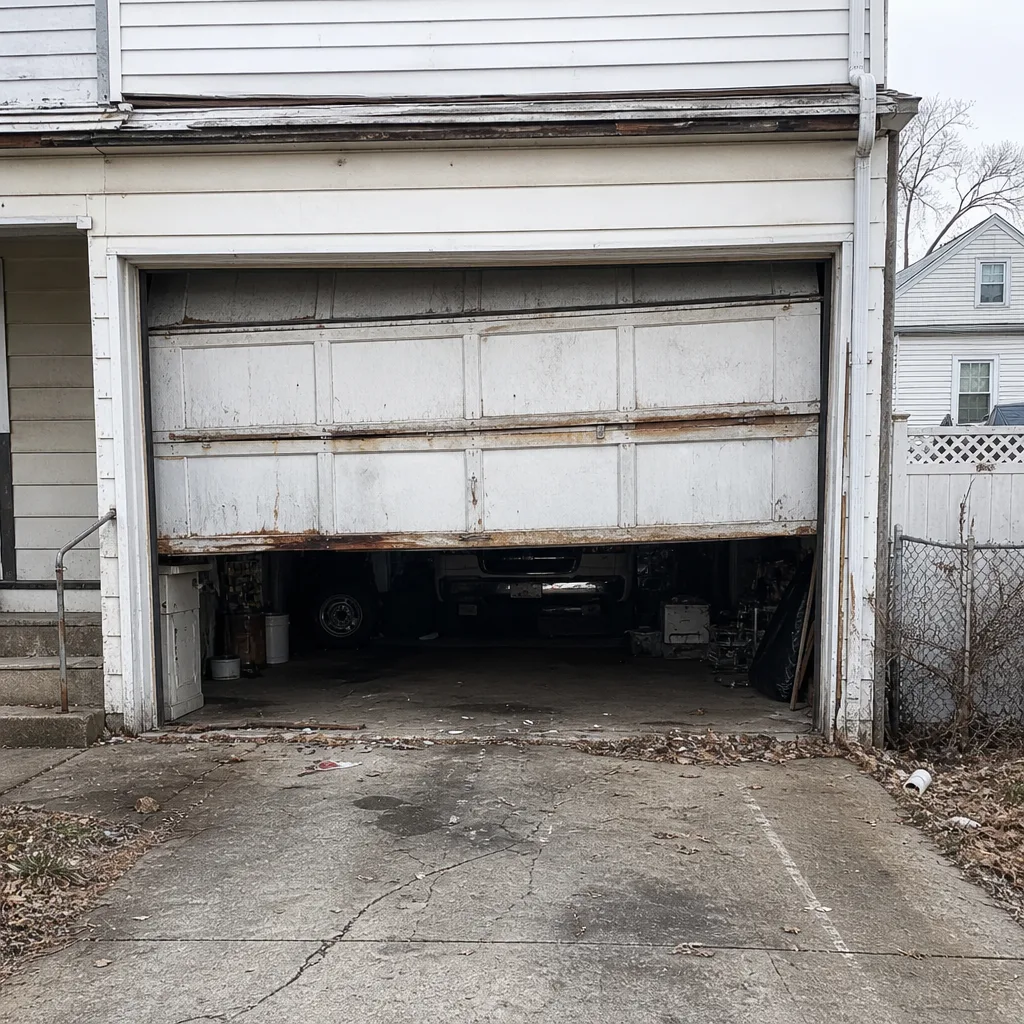
- Replacement makes sense when panels are bent or rusted, the tracks are bowed, the door has been shimmed to fit a non-standard opening, or the door’s age puts it beyond reasonable repair costs. Older wood doors in Paterson often fall into this category because moisture damage accumulates in the bottom panels.
- Replacement also makes sense when the door is functionally wrong for the opening. A door shimmed into a rough opening that was never framed for it will keep failing until the opening is corrected, and at that point you’re already doing the work.
What we don’t recommend is a partial replacement. Replacing the door but not the opener, or the opener but not the door, is a common mistake on older homes, and it usually produces a system that fights itself. Match the opener to the weight and travel of the new door, and match the door to the actual clearance of the garage. An installation done that way answers your free-estimate call in one visit instead of two.
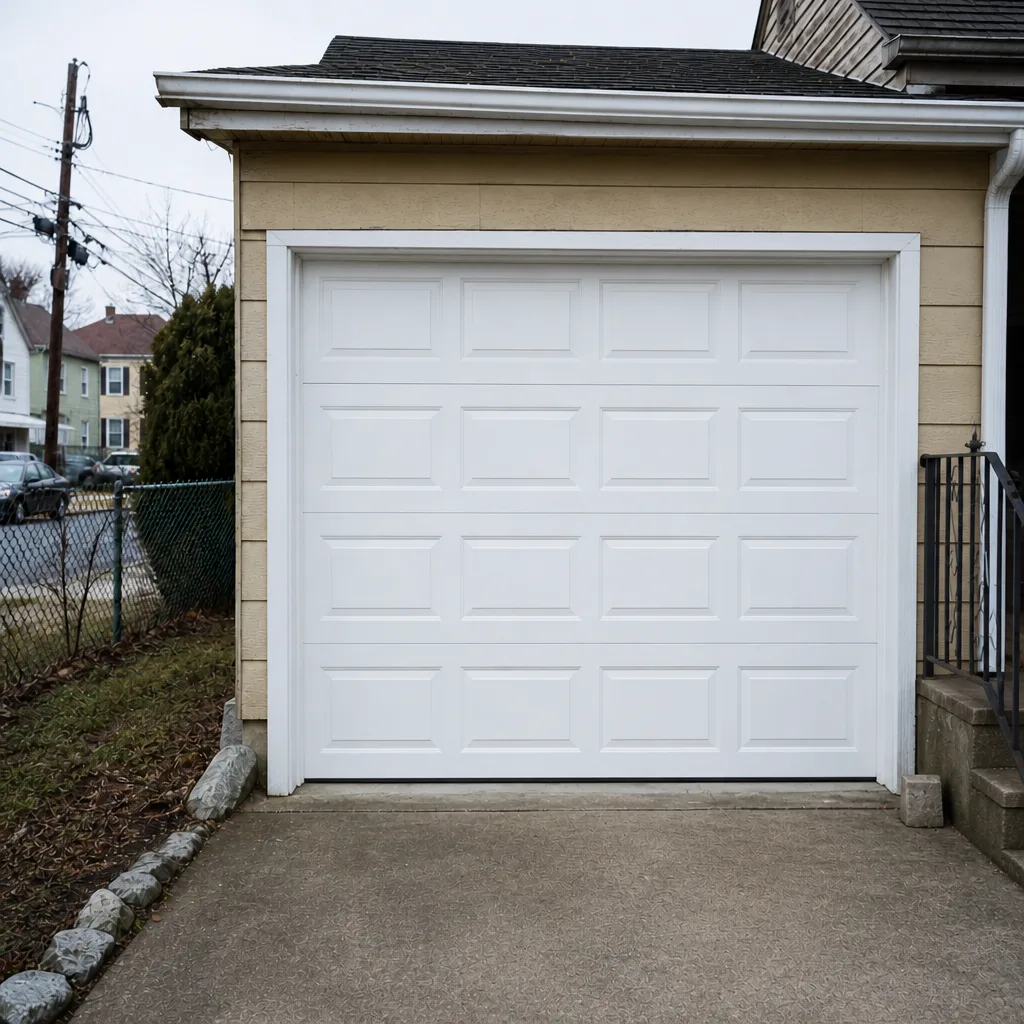
When you do replace, the brands we install most often on Paterson homes are Amarr, Wayne Dalton, and Clopay, because they offer enough size flexibility to fit the non-standard openings this housing stock produces.
How to Document Your Door Before You Call Anyone
You’ll save yourself a call and a callback by measuring and photographing your door before you pick up the phone. A specialist can diagnose faster with a model number than without one, and the difference between a phone call that ends in a booked visit and a phone call that ends in “I’ll come look” is often whether you can answer three questions.
- Measure the opening. Width and height, plus headroom above the opening. Note whether the opening is square and whether the header is level. Photograph each measurement with a tape in frame.
- Find the model number on the door. Most residential doors carry a sticker or stamp on the inside of a bottom or second panel. Photograph it. If it’s gone, photograph the panel profile, the hinges, and the end stiles.
- Find the opener’s model and manufacture date. The opener’s label or sticker is usually on the motor housing behind the light cover. Note the brand and the serial, and check the wall control for the smart-home interface (a myQ label, for instance).
- Photograph the springs, cables, and tracks. Photograph from a distance. Never touch the springs or cables, and never try to measure them with the door down. These parts are under high tension even when the door looks still.
- Note what’s broken in one sentence. “Door won’t open from the wall control, opener light flashes” tells a technician more than “the door is broken.”
That documentation gives you a real starting point when you call. For more on the repair side, see garage door repair, and for the drive system specifically, garage door opener repair.
Openers: Why the Model Number Matters More Than the Brand Name
Openers are where brand knowledge pays off most. LiftMaster and Chamberlain share a technology platform, which means a technician who knows one knows the other at the diagnostic level. Craftsman units from the 1990s and Raynor openers on older homes use different logic boards and different parts, so the diagnosing path is different even though the symptom looks the same.
What usually fails first on a Paterson garage opener:
- Logic board or capacitor on older units, often showing as intermittent or no response to the wall control.
- Drive gear or belt on belt-drive and chain-drive units, showing as grinding or slipping.
- Safety sensor alignment, which is the most common cause of a door that opens but won’t close.
- Force limits and travel settings that drift over time, especially on heavy wood doors.
The mistake we see most often is a homeowner replacing a whole opener when a logic board or a sensor alignment would fix it. The second most common is a generalist contractor installing a new opener that isn’t matched to the door’s weight and clearance, which produces a callback. Your opener model matters, and we treat opener repair as its own specialty rather than a footnote under general door repair, because the drive system is a different problem than the door itself.
Springs, Cables, and the Parts You Should Never Touch Yourself
Garage door torsion springs are under enough tension to cause serious injury, and that tension is present even when the door looks stationary. Cables are similarly loaded. If you’re seeing a snapped spring, a cable that’s come off its drum, or a door that’s sagging to one side, the right move is to stop using the door and call a trained technician.
What you can safely check: the door’s balance from outside (with the opener disconnected, if you know how to disconnect it without standing under a loaded door), the alignment of the safety sensors at the bottom of the tracks, and the condition of the weather seal across the bottom of the door. Everything above the bottom panel is technician territory.
We give this warning on every springs job in Paterson, and we give it honestly: there is no safe DIY path for a torsion spring replacement, no matter how many videos you watch. A licensed technician with the right winding bars and the right experience will replace it correctly the first time. If a door on your Paterson property is showing spring or cable failure, call a specialized repair service rather than a generalist.
Common Mistakes to Avoid
- Buying a door online before measuring the opening. Paterson’s older homes rarely have standard rough openings, and a fifteen-foot door won’t fit a fourteen-foot frame no matter how carefully it was packed.
- Replacing the opener without checking the door. A new opener on a door with a failing spring burns out the new opener. Fix the door, then match the opener to it.
- Assuming a brand tells you the model. Two doors from the same manufacturer can have different spring systems, and two openers from the same brand can run different logic boards. Get the model number.
- Choosing a door for the street instead of the garage. In Paterson, the door that looks best from the sidewalk may not clear the alley or the driveway. Fit first, appearance second.
- Skipping the permit question. Many replacement and structural work items require a permit. Call your city’s building department and ask before the door is ordered.
- Ignoring a sagging or grinding door for months. A worn roller is cheap to replace. A worn roller that damages the track and the hinge is not.
- Hiring a generalist for a brand-specific system. A Craftsman or Raynor system has its own quirks. A technician who has worked on that model recognizes the failure pattern faster than someone learning on the job.
See the difference
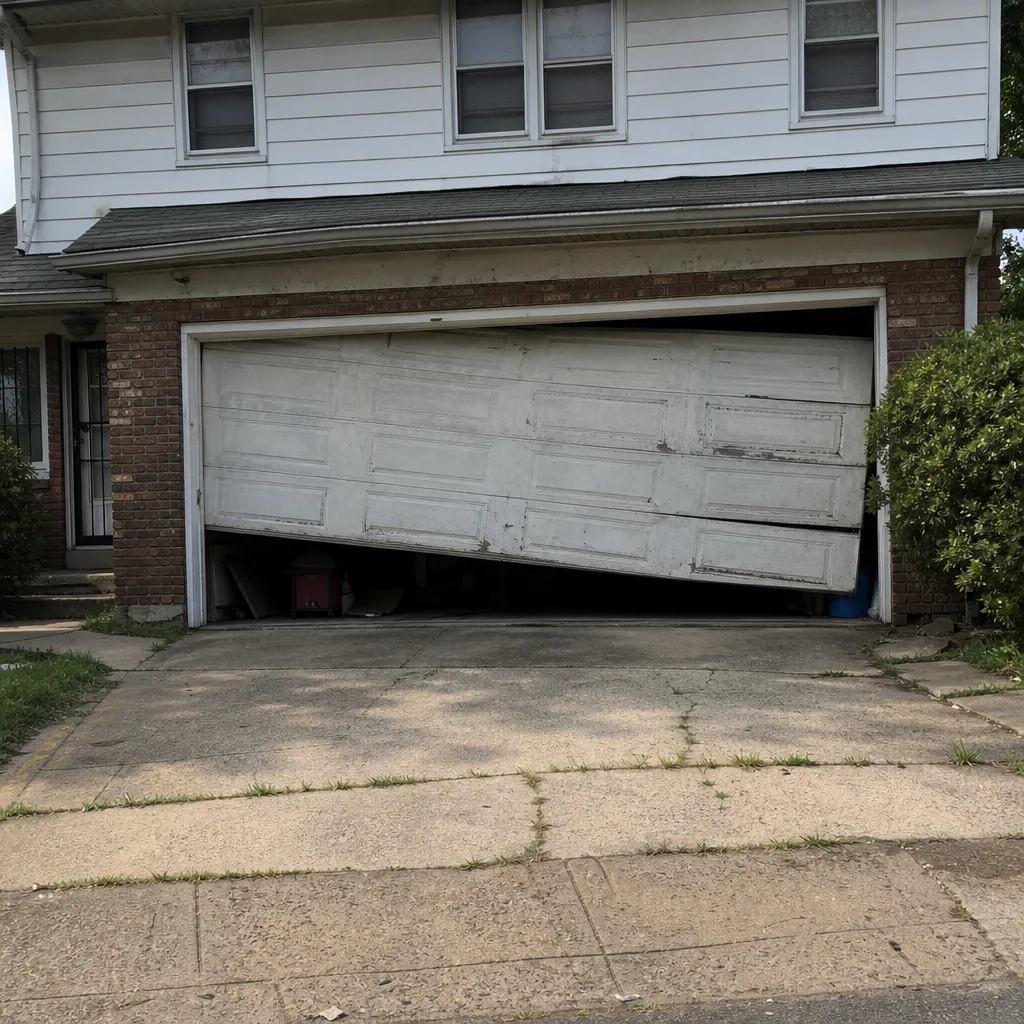 Before
 After
 Before
 After
 Before
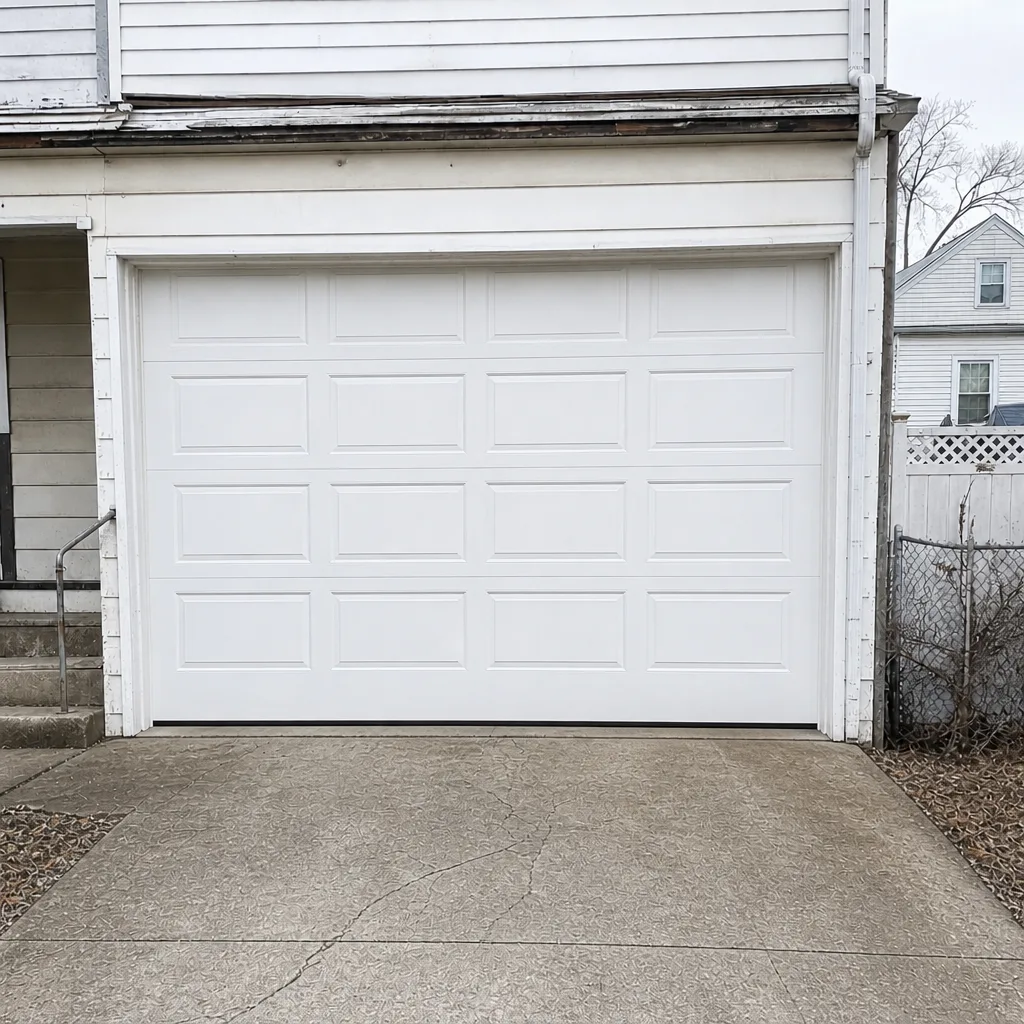 After
When to Call a Professional
Call a professional for any spring, cable, or track work, for a door that’s off its track, for an opener that’s flashing an error code you can’t identify, and for any installation where the opening is non-standard. Call for a door that reverses at random or won’t close fully. Call for an opener repair after a power outage leaves it unresponsive when the wall control doesn’t fix it. If you’re not sure whether a door or opener needs repair or replacement, call for a free estimate rather than guessing, since the wrong purchase costs more than a diagnostic visit. Lancaster Garage Door Service offers free estimates in Paterson, and one call covers door repair, opener repair, and installation. Call (844) 902-2470. We answer 24/7. Fast dispatch from 7am to 7pm, Sunday through Friday.
Frequently Asked Questions
Most municipalities require a permit for a full door replacement, though the specific rules depend on your city’s building department. Ask them directly before you order the door, and confirm what the plan requires so the installation matches it. If you’re not sure what to ask, we can help you frame the question when you call for an estimate.
A standard replacement usually takes the better part of a day, and an installation on an older Paterson home can run longer if the opening needs correction or the clearance is tight. The right sequence is a free measure and a written estimate first, then a scheduled install. Call (844) 902-2470 for an exact quote.
Usually yes, if the door and its springs are sound. Older Craftsman openers are still serviceable, and a logic board or a sensor alignment is often a fraction of the cost of a full opener replacement. We diagnose the specific failure first before recommending a new unit.
You’ll most often see Wayne Dalton, Raynor, and Clopay on Paterson homes, plus LiftMaster, Chamberlain, and Craftsman openers. If you don’t know what you have, a photo of the model sticker is enough for a specialist to identify it. We work on all of these brands and can tell you on the phone what you’re likely looking at.
Often yes for repairs, depending on the diagnosis and parts availability. Spring, cable, roller, and opener problems are frequently resolvable in a single visit. Installation is scheduled separately because it requires a measure and a written estimate first.
No. We quote the job, we agree the price with you before any work starts, and the written estimate is the price you pay. There’s no surprise invoice after the fact. Call (844) 902-2470 for an exact quote, and we answer 24/7.
The Bottom Line
Garage doors in Paterson live in someone else’s housing stock: tight lots, older two-families, alley garages, and rough openings that don’t fit “standard” anything. Measure before you buy, get the model numbers of what you have, and frame repair versus replacement around how long you’ll own the property. That thinking saves more money than a discount on a door that won’t fit. If you need a repair, an opener fixed, or a full replacement, we handle all three on the brands most Paterson homes carry, including Amarr, Wayne Dalton, Craftsman, and Raynor. Call (844) 902-2470 for a free estimate, or start from our Lancaster Garage Door Service homepage. We also cover Paterson neighbors throughout the city.
Written by the team at Lancaster Garage Door Service.