
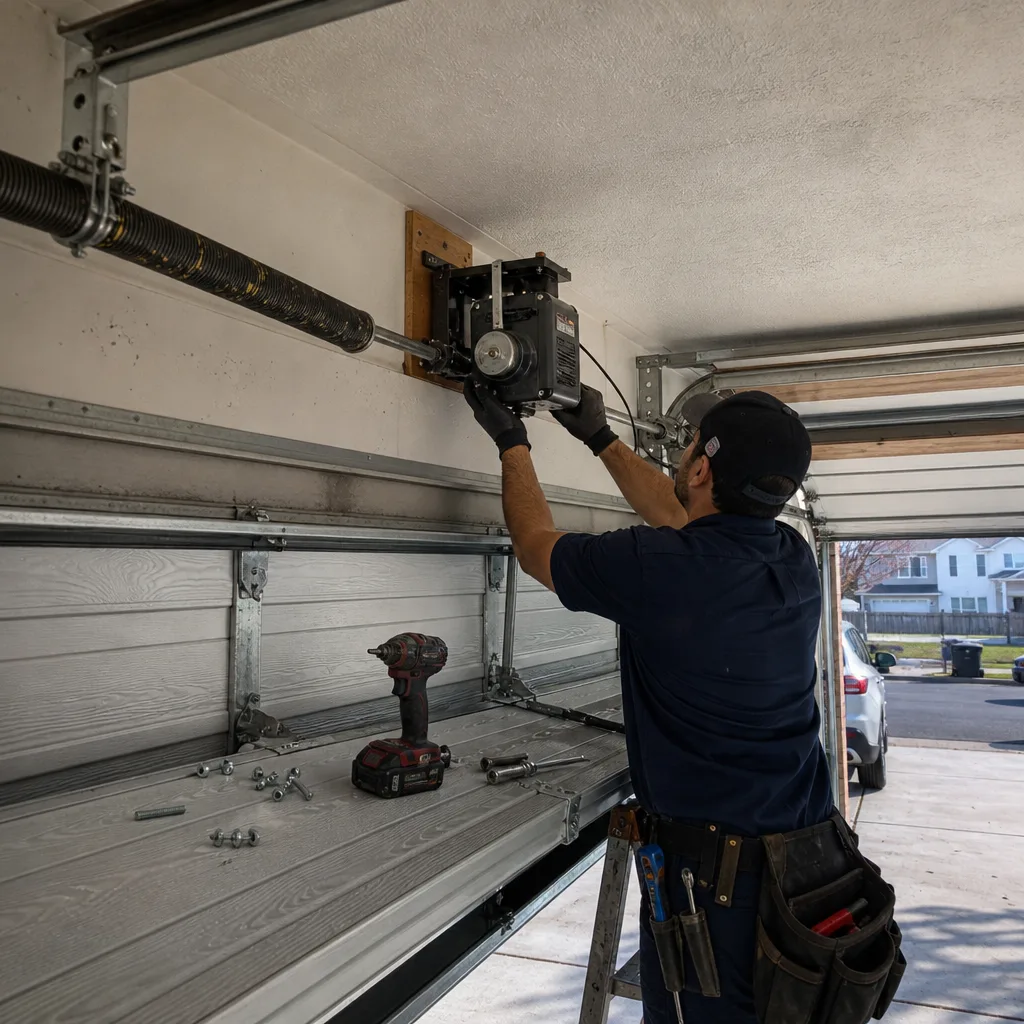
Last updated November 15, 2026
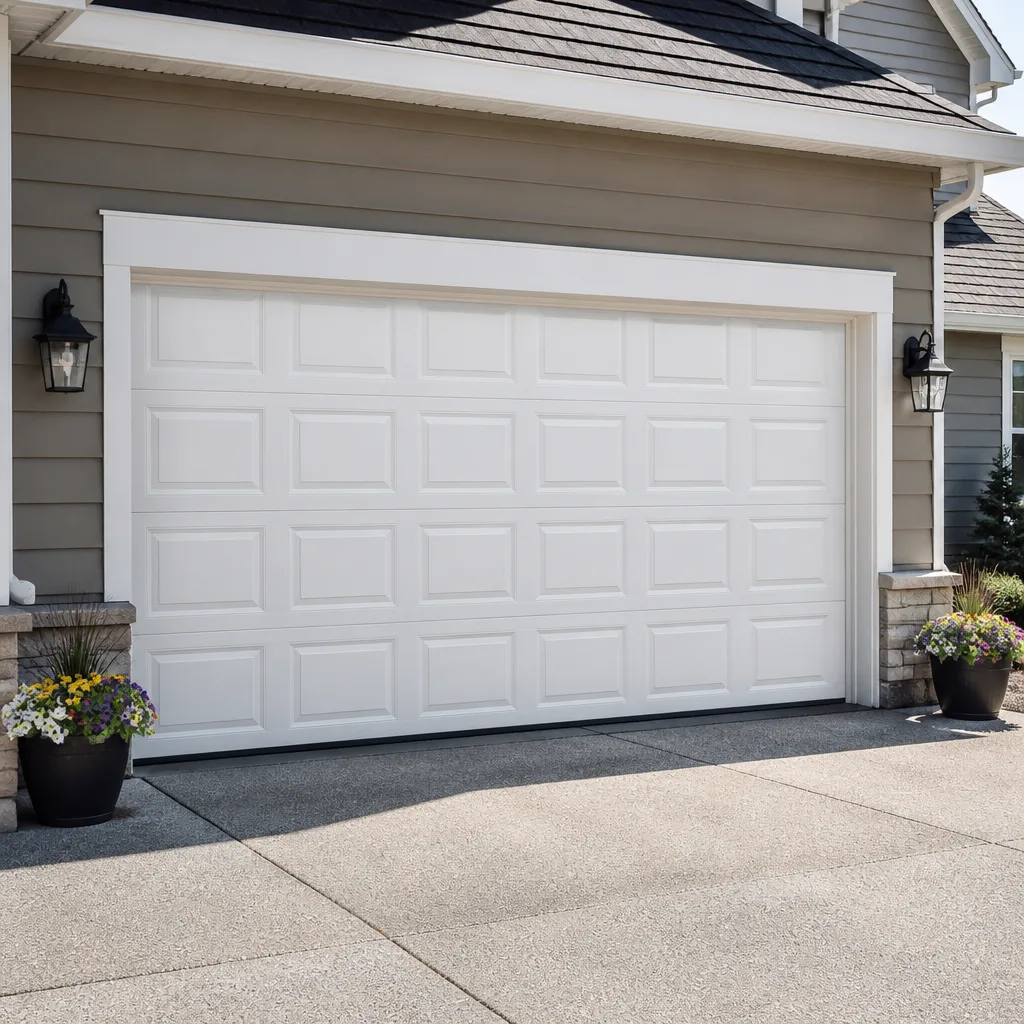 Raised-panel steel
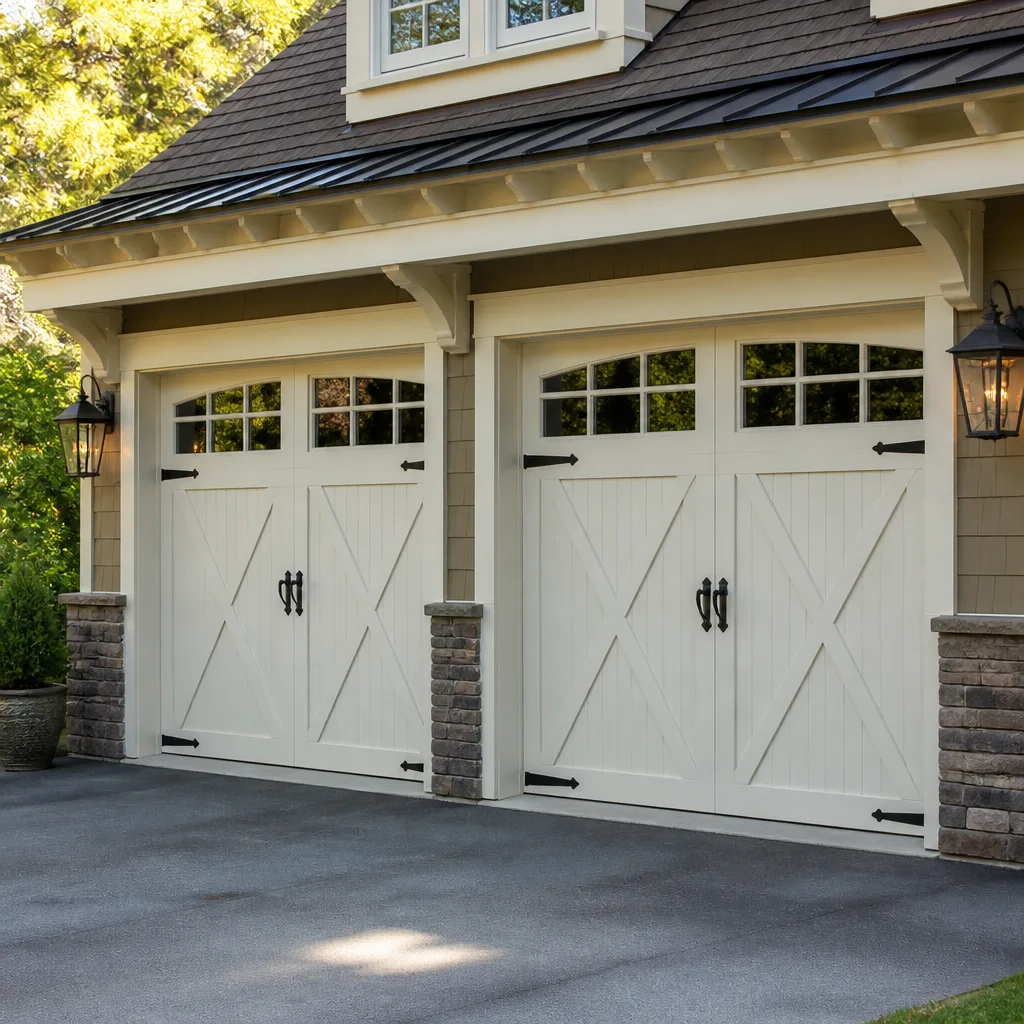 Carriage house
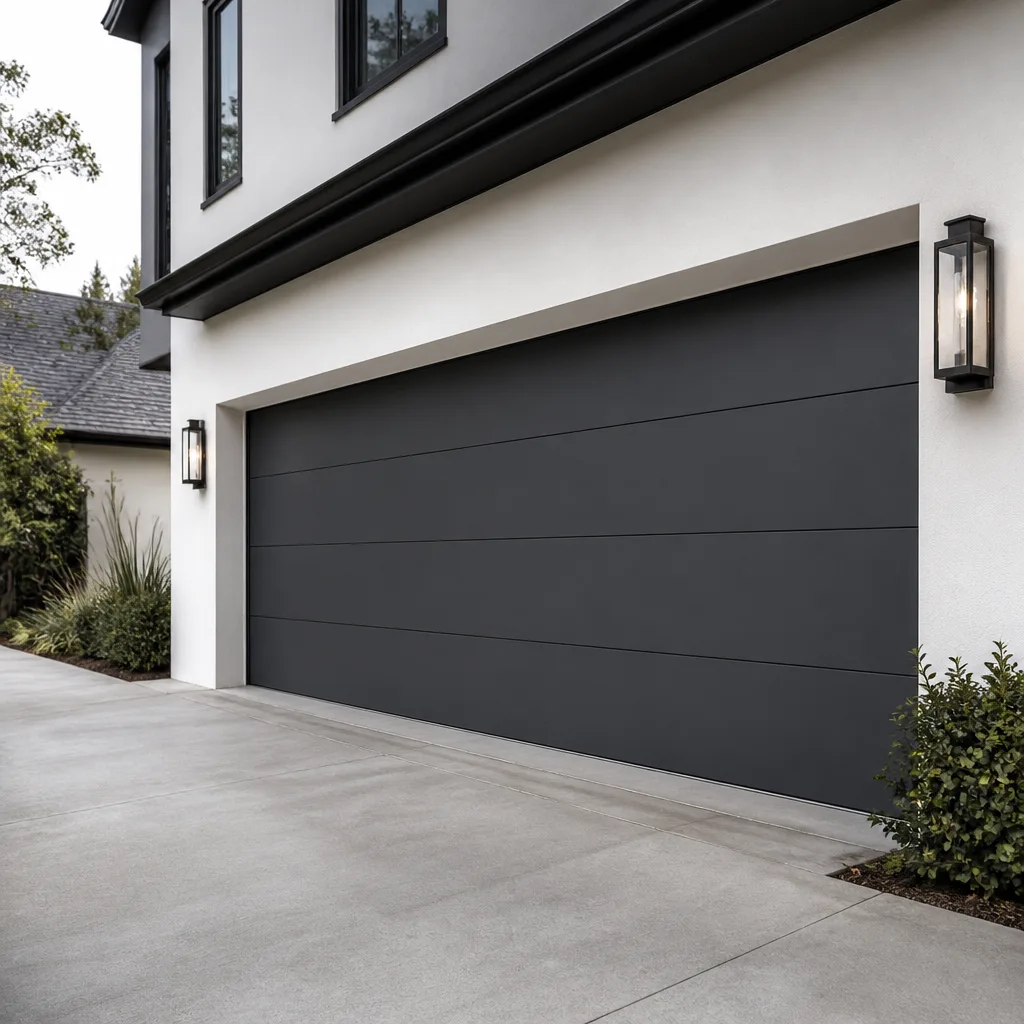 Modern flush
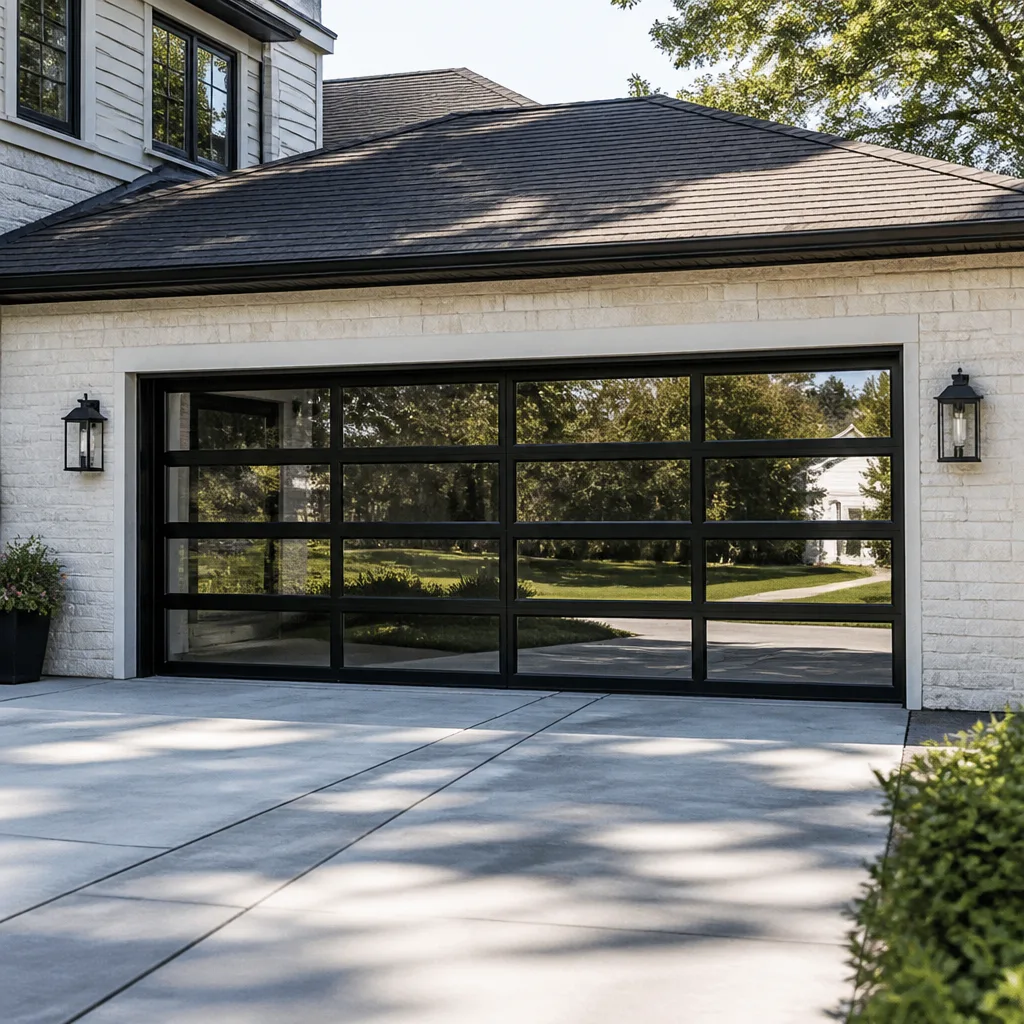 Full-view glass
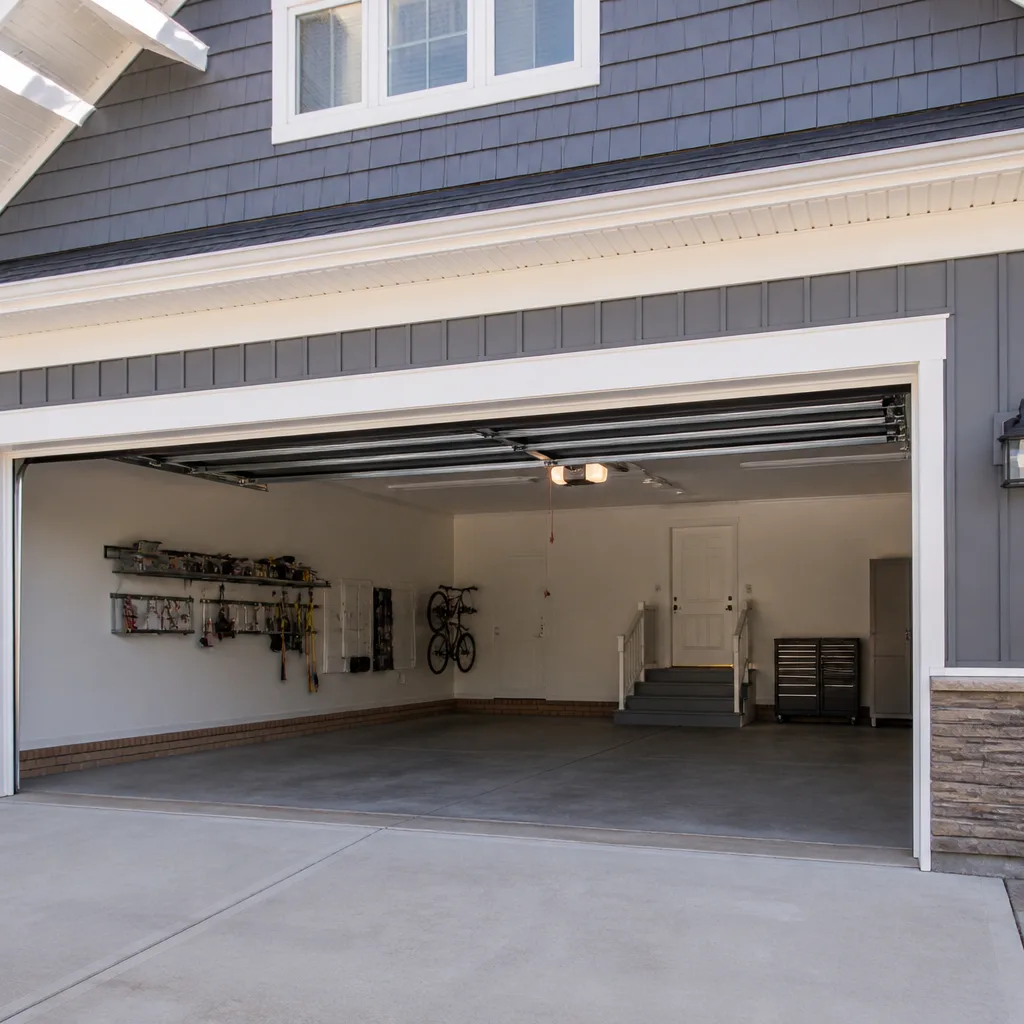 LiftMaster openers
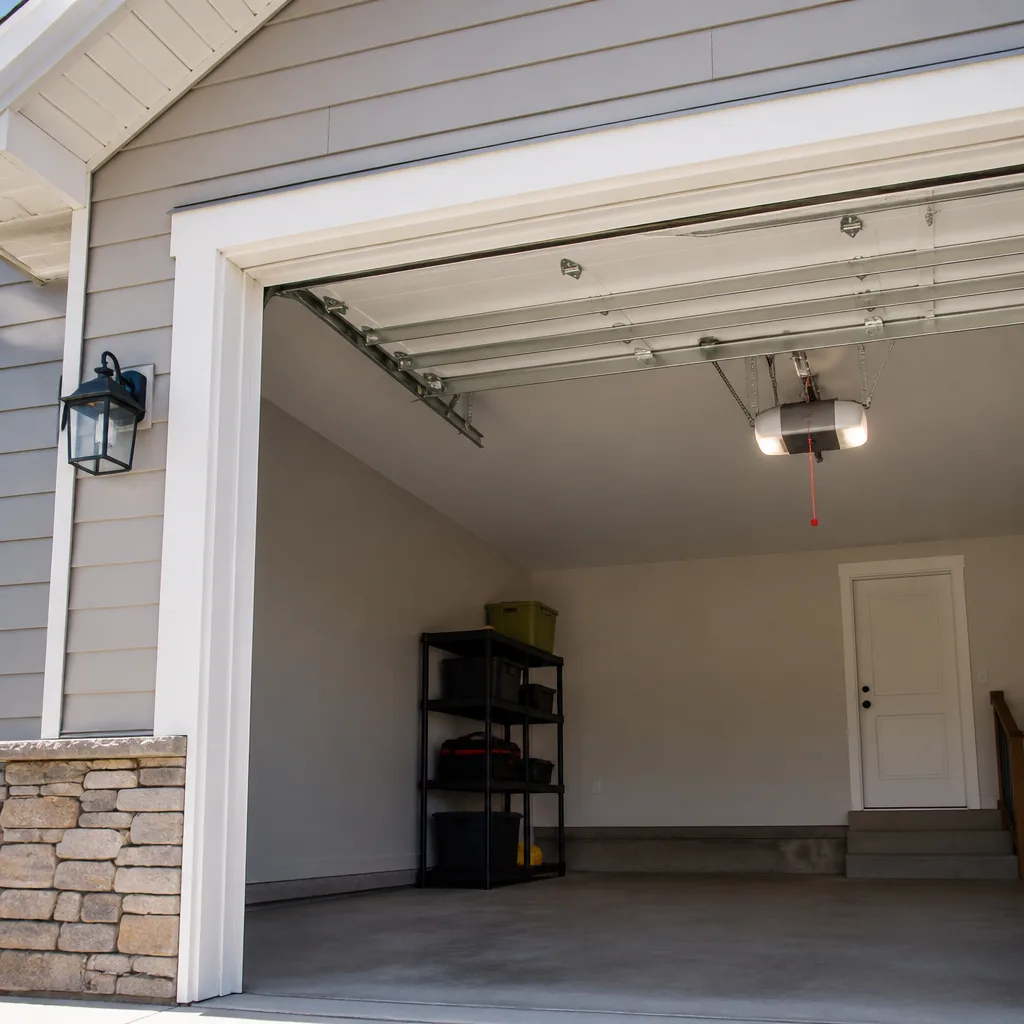 Chamberlain openers
Full 25-point door and opener safety check with every visit - springs, cables, rollers, tracks, and your LiftMaster or Chamberlain opener included
You get a price before we start. It does not change when the pro arrives.
Get your free estimateGarage Door Emergency Preparedness Guide for Paterson Homes
Most garage door emergencies get worse in the ten minutes after the door stops moving. A broken spring doesn’t just strand a car; it tempts a homeowner to hit the opener button again and again, and that repeated strain is what burns out the motor. Paterson homes are full of older doors and legacy openers that were never built for that kind of punishment, and the households here depend on their garages daily, often for parking that off-street space in the tight neighborhoods near downtown. This guide covers the few manual operations that buy you time, how to tell a spring break from a cable snap, how to keep a stuck-open door secure for a night, and what to have ready when you call. We’ll keep it practical.
Quick Answer
When a garage door fails in Paterson, stop pressing the opener immediately, pull the red release cord to disengage the trolley, and lift the door manually with two people only if the springs aren’t broken. If a spring is broken, leave the door down and call for repair. Getting the diagnostic right in the first minute prevents the opener damage and the injury risk that follow a bad reaction.
Styles & brands we work with
- Raised-panel steel
- Carriage house
- Modern flush
- Full-view glass
- LiftMaster openers
- Chamberlain openers
Table of Contents
- How to Identify What Actually Broke
- The Manual Override: Disengaging, Lifting, and Securing the Door
- When Your Door Is Stuck Open: Interim Security
- The Power Outage Scenario
- What to Have Ready When You Call
- Spring and Cable Safety: Why You Don’t Touch Them
- Prevention: What Prevents the Next Emergency
- Cold-Weather and Seasonal Considerations in Paterson
How to Identify What Actually Broke
The diagnostic step changes everything that follows. A door that stopped because of a snapped spring should not be lifted by hand or cycled with the opener. A door that stopped because of a cable issue or a bent track behaves differently, and you need to recognize the signature before you decide what to do.
Spring breaks are the most common cause of a door that goes up partway and won’t continue. The tell is a loud bang like a firecracker followed by the door sagging and the opener straining. Look from inside the garage at the horizontal spring above the door or the torsion spring on the shaft. A gap in the coils, or two clean ends where there used to be a continuous coil, confirms it.
- Broken spring: loud bang, door rises a foot or two then stops, gap visible in the coil, opener hums but the door won’t move.
- Snapped cable: door drops crooked, one side hangs lower than the other, a frayed or slack steel cable dangles on one side.
- Bent track: door binds partway up, and you can see the vertical or horizontal track bowed or separated from its brackets.
- Dead opener: no hum, no movement, but the door is light to lift by hand and the springs are intact.
Knowing which of these you’re looking at lets you decide whether manual lifting is safe. If a spring is broken or a cable is snapped, the door is under unbalanced load and should not be forced.
The Manual Override: Disengaging, Lifting, and Securing the Door
Most residential openers, including the LiftMaster and Craftsman systems common in Paterson garages, use the same basic release mechanism: a red handle or cord hanging from the trolley that rides the rail. Pulling it disengages the trolley from the door so the door can move independently of the opener. That’s the operation that buys you time, and it’s worth knowing before you need it.
- Confirm the springs are intact. If you see a broken spring or a snapped cable, stop here. Do not disengage and do not lift. Call for repair.
- Close the door if it’s partially open and the springs are intact. Release the trolley only once the door is fully closed and at rest.
- Pull the red release cord straight down. You’ll hear or feel a click as the trolley disengages from the door arm.
- Lift with two people. One on each side, hands on the bottom section’s edges, not the panels. Lift slowly and evenly. A door with intact springs should lift with modest effort.
- Secure it open by lowering it back down fully, or by propping a wood block under the bottom section if you need it to stay up. Never leave a disengaged door up without securing it while anyone is underneath.
- Re-engage when done. With the door fully closed, pull the release cord again to reset the trolley, then run the opener once to confirm the door cycles.
If the door resists lifting more than you’d expect, the springs aren’t doing their job. Put it back down and call. Forcing a heavy door is how backs get hurt and panels get bent.
When Your Door Is Stuck Open: Interim Security
A door that won’t close is the emergency Paterson homeowners notice fastest, because an open garage is an open invitation in a city where garages often face alleys or shared driveways. The goal for a night or two isn’t a permanent fix; it’s a barrier that actually resists entry and looks like it does.
- Works: a heavy steel bar or a length of lumber laid across the inside track at the bottom, wedged between the track and the door. This physically blocks the door from being pushed up.
- Works: a padlock through the track and door hinge on one side. It won’t stop a determined break-in, but it raises the effort enough to matter.
- Works: moving anything valuable out of the garage for the night, and parking a car in front of the opening if the geometry allows.
- Gives false confidence: a padlock on the outside handle only. Most residential doors don’t lock through the handle, and an open door can still be lifted from outside.
- Gives false confidence: wedging a chair or a broom under the door. The door’s weight will just crush it.
- Gives false confidence: leaving the opener engaged and hoping. If the door is stuck open because of a broken spring, the opener will keep running and burning out.
In the tighter blocks of Paterson, where a garage opening may be visible from the street, the physical block inside the track is the measure that buys the most security for the least effort.
The Power Outage Scenario
An extended outage separates two kinds of doors: those with a battery backup opener and those without. If your opener has a battery backup, the door usually keeps working normally for a limited time, and you may not notice the outage at all until the battery runs down. Models with the LiftMaster or Chamberlain myQ ecosystem often carry this feature, and it’s worth checking your opener’s manual to know whether yours does.
Without battery backup, the door stops responding to the remote and the wall button. The fix is the same manual release described above: pull the red cord, disengage the trolley, and lift the door by hand with two people. What changes during an outage is the re-engagement step. Once the power comes back, run the opener once to reprogram the travel limits if the door stalled mid-travel; many openers will need a single cycle to reset.
One more thing worth knowing: a door left disengaged during an outage can be cycled by hand as often as you need. Just don’t leave it up and unattended, and re-engage the trolley once power returns.
What to Have Ready When You Call
An accurate description on the phone is what shortens the visit. When you call Lancaster Garage Door Service for garage door repair, the technician who arrives should come equipped for what’s actually wrong, and the information you provide is what makes that possible.
- Door width and material. Measure across the opening. A standard single door is about 8 or 9 feet wide; a double is about 16. Steel, wood, and aluminum behave differently.
- Spring type. From inside the garage, note whether the spring is horizontal above the door (extension) or wound on a shaft above the door (torsion). Either the coil is exposed or it’s inside a tube.
- Opener brand and model if visible. Look at the motor housing. LiftMaster, Chamberlain, Genie, Craftsman, and Raynor are the brands we see most in Paterson homes, and knowing which you have helps us match the right parts and diagnostics.
- Stuck open or stuck closed. This determines how urgently we need to get there and what interim steps you should take.
- What you’ve already tried. Tell us if you’ve pulled the release cord, pressed the wall button, or checked the breaker. It saves time.
Our technicians have up to 14 years of experience, and they’ve worked on doors across every configuration these older Paterson garages present. We answer 24/7. Fast dispatch from 7am to 7pm, Sunday through Friday.
Spring and Cable Safety: Why You Don’t Touch Them
Springs and cables are the two parts of a garage door that can seriously hurt you. A torsion spring is under hundreds of pounds of tension even when the door is closed, and an extension spring under load can release violently if you try to remove it. There is no safe way to handle either without the right winding bars and the training to use them. This is not a step-by-step for DIY; it’s a boundary.
What you can do safely is inspect from a distance. Look up at the spring and note whether the coils are intact or gapped. Look at the cables on each side and check for fraying or slack. Look at the track for obvious bends. That’s the diagnosis. The repair is a professional job, and it’s the one part of garage door work where a trained technician is genuinely necessary rather than merely convenient.
If a cable has snapped and the door is hanging crooked, that’s the same rule as a broken spring: don’t lift, don’t disengage. Call for repair. Our team handles garage door opener repair and the door-side repairs that go with it, and we can diagnose the full picture in one visit rather than piecemeal.
Prevention: What Prevents the Next Emergency
Emergencies are usually the last in a series of small warnings. A door that has been getting noisier, slower, or heavier for a few weeks has been telling you something. Here’s what to check and when to act.
- Monthly: the balance test. Disengage the opener and lift the door halfway. If it stays put, the springs are balanced. If it drops, the springs are losing tension.
- Monthly: the safety reverse test. Place a wood block on the floor under the door and run it closed. The door should reverse on contact. If it doesn’t, the opener’s safety system needs attention.
- Every few months: lubricate the rollers, hinges, and spring coils with a spray lubricant rated for the job. A dry spring is a noisy spring, and noise is a wear signal.
- Yearly: have a technician check the spring tension, cable condition, and track alignment. In Paterson’s freeze-thaw winters, the metal contracts and expands seasonally, and the check matters more here than in milder climates.
Our Lancaster Garage Door Service team sees the same pattern repeatedly: a door that sat on a worn spring through the winter and finally broke on the first warm morning. That break was predictable, and catching it early is the difference between a repair and a scramble.
Cold-Weather and Seasonal Considerations in Paterson
Paterson’s winters stress garage doors more than most homeowners expect. The freeze-thaw cycle widens and contracts the metal panels and the steel tracks, and a spring that spent all summer at the edge of its life can give out on the coldest night of the year. Doors that sit unused through January are especially prone, because the grease on the springs and rollers thickens and the door runs heavier when you finally open it.
A few seasonal habits help. Clear snow and ice from the bottom seal and the threshold before opening the door, because a frozen seal can bind the door and strain the opener. Run the door once a week during cold spells even if you don’t need to park inside, which keeps the grease moving and the springs exercising. If you notice the door sounds louder or slower in January than it did in October, that’s the weather talking, and a check is cheaper than a call.
The other Paterson-specific factor is the age of the housing stock. Many of the city’s homes have original or near-original door systems, and an older Wayne Dalton, Raynor, or Craftsman setup has been through decades of these cycles. An annual inspection is how you find the weak point before it fails.
Common Mistakes to Avoid
- Hitting the opener again after a spring break. The motor is trying to lift a door with no assistance, and that’s what burns it out. Stop the moment the door won’t move.
- Lifting a door with a broken spring. It’s heavier than it looks and it can come down on you. Only lift a door whose springs are intact.
- Assuming the door is fixed because it moved once. A door that cycles after a stall still has whatever caused the stall. Watch for a repeat, and have it checked.
- Leaving a stuck-open door overnight with only an outside lock. In Paterson’s denser blocks, an open garage is visible. Block the inside track with a steel bar for real security.
- Pulling the release cord with the door up. That can drop the door. Always release the trolley with the door fully closed and at rest.
- Trying to adjust the springs with hand tools. This is the mistake that sends people to the emergency room. Springs require winding bars and training.
- Ignoring the seasonal warning signs. Noise, slowness, and a door that sags on one side are all invitations to break down at the worst time.
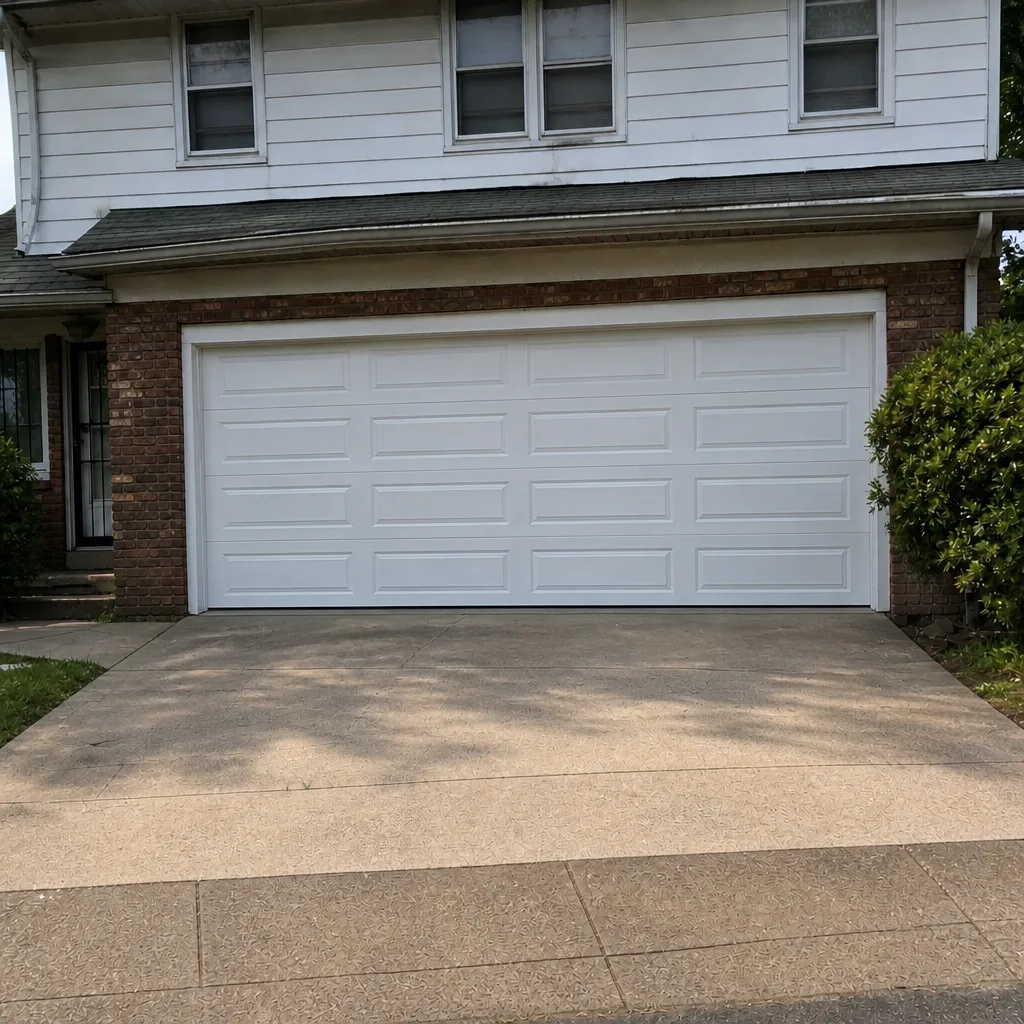
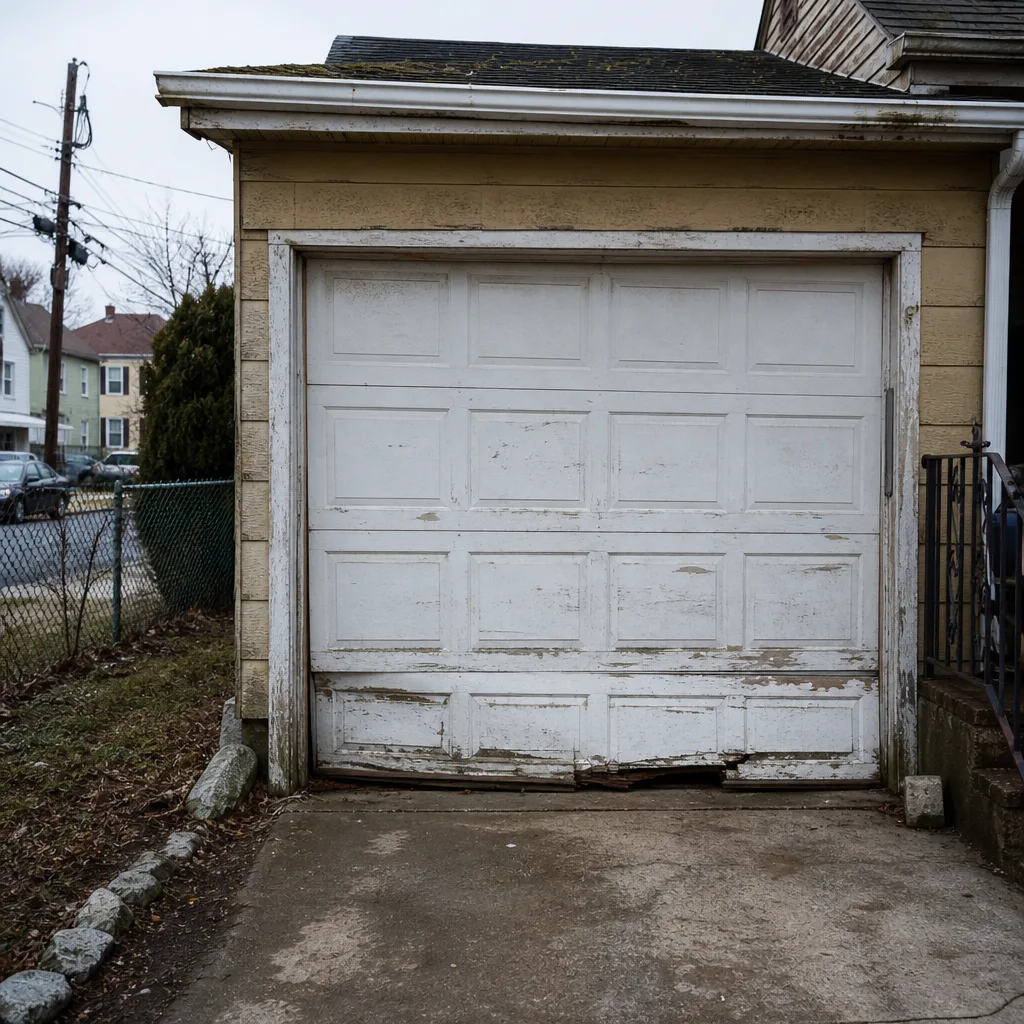
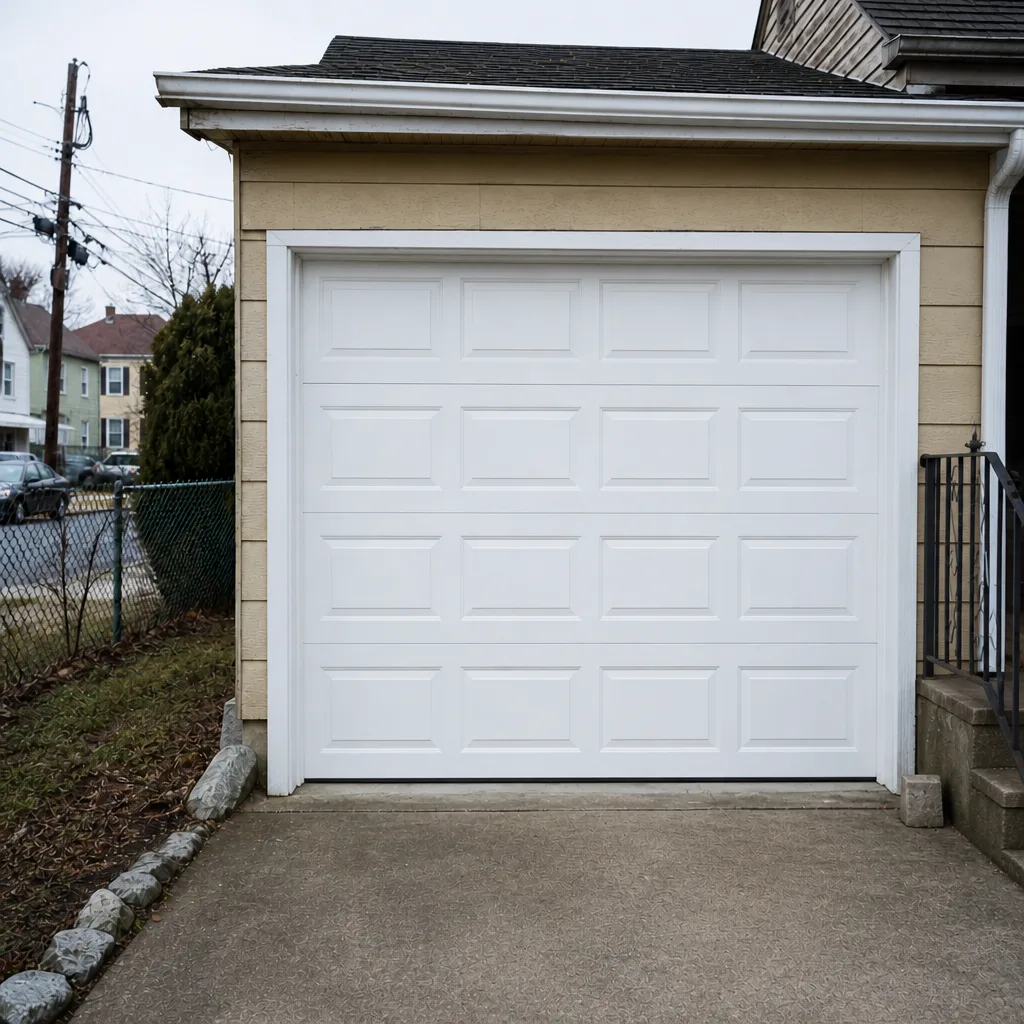
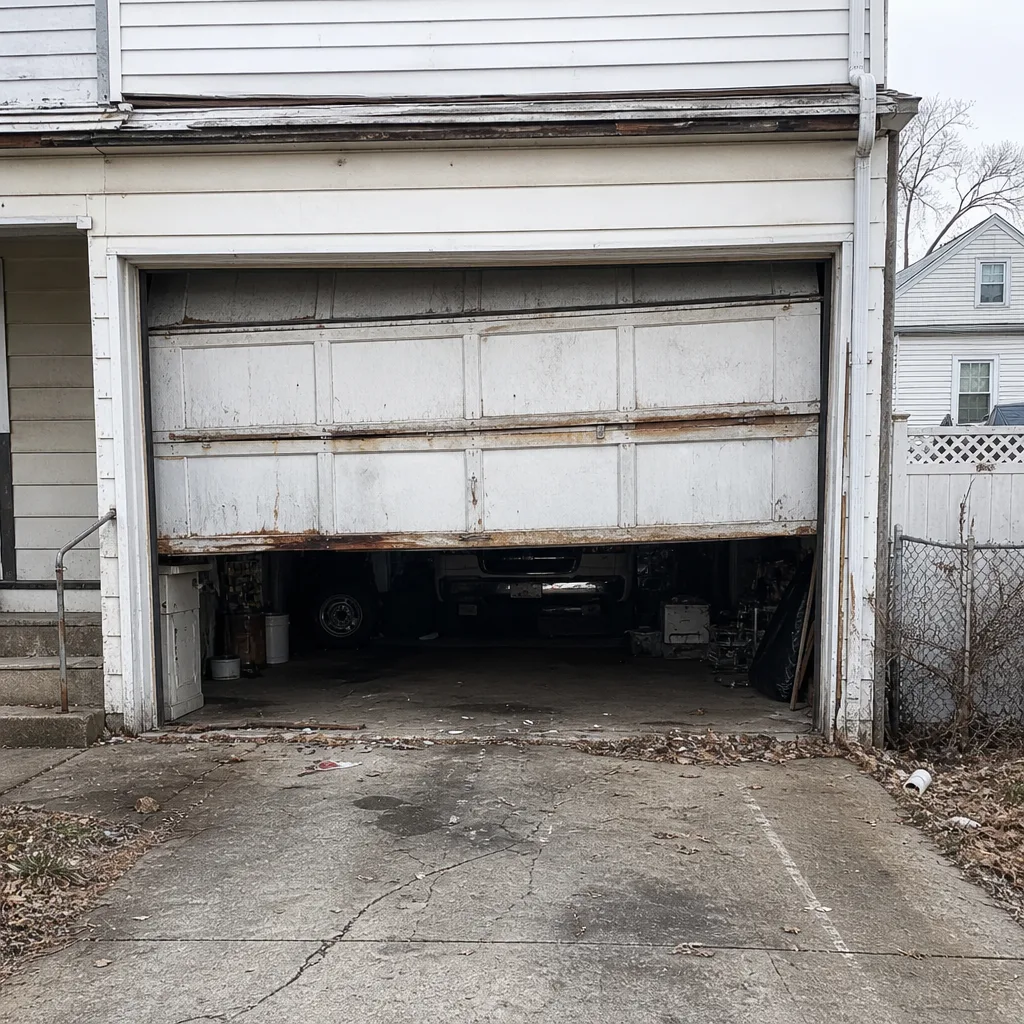
See the difference
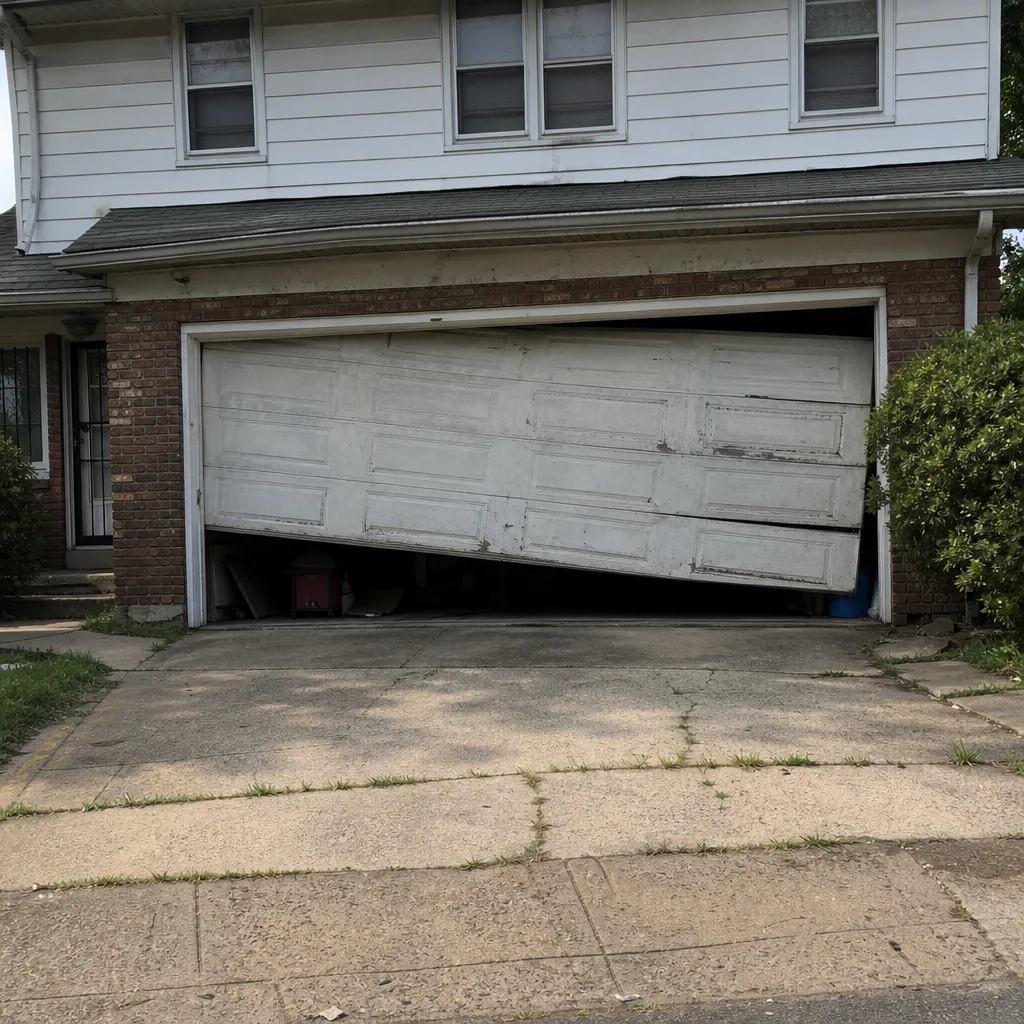 Before
 After
 Before
 After
 Before
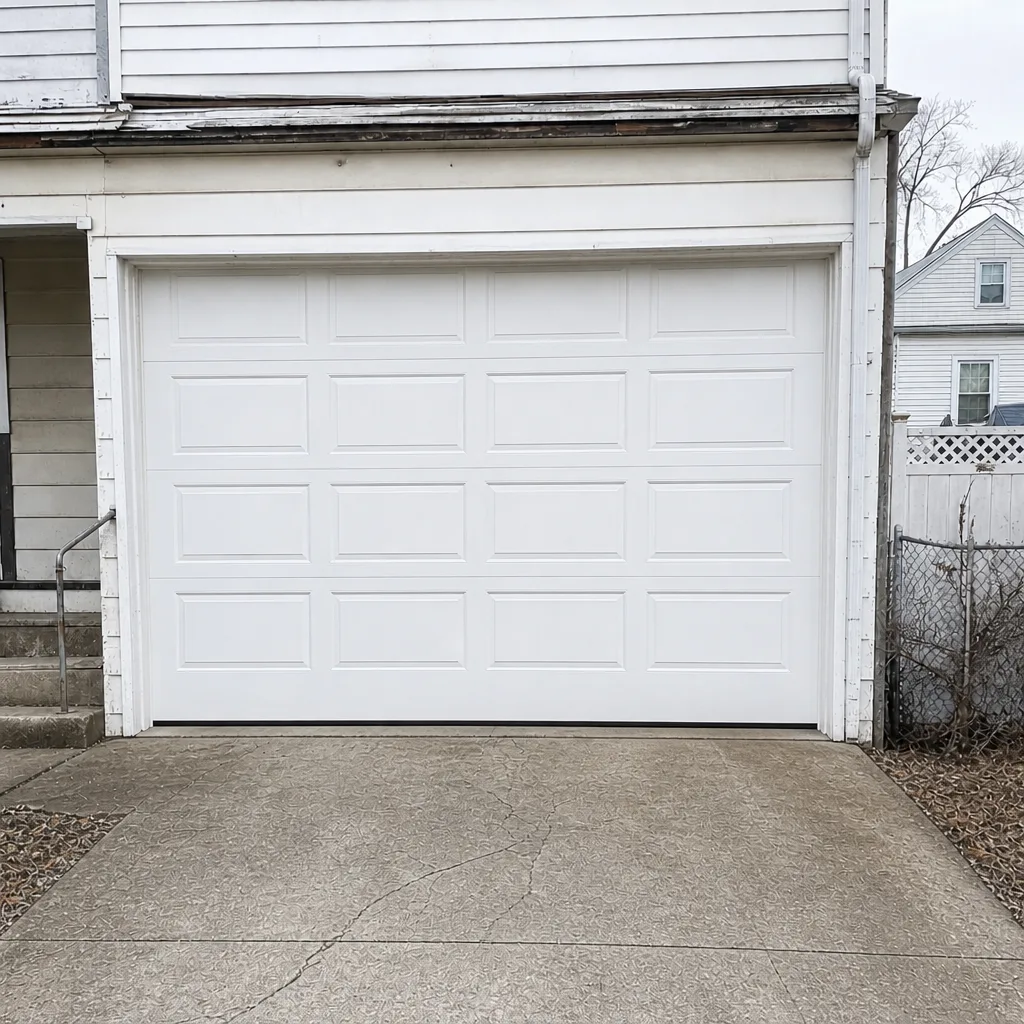 After
When to Call a Professional
Call when a spring has broken, a cable has snapped, the door has come off its track, or the opener runs but the door won’t move. Also call when the door is stuck open and you need it secured, or when the balance test shows the springs are losing tension and the door is getting heavy. Those are the cases where continuing to operate the door on your own will make the eventual repair bigger. Lancaster Garage Door Service offers free estimates in Paterson. Call (844) 902-2470. We answer 24/7. Fast dispatch from 7am to 7pm, Sunday through Friday.
If you’re not sure whether your situation is an emergency, describe it to us. A door that’s stuck but stable can wait for the next opening; a door that’s hanging crooked or has a broken spring shouldn’t be touched until we’re there. Either way, the estimate is free and the price is set by the written estimate before any work starts.
Frequently Asked Questions
Yes, but only if the springs are intact and you disengage the opener first. Pull the red release cord to disconnect the trolley, then lift with two people, one on each side, hands on the bottom section. If you see a broken spring or snapped cable, don’t lift. Call for repair.
A broken spring shows a clear gap in the coil, or two clean ends where the coil used to be continuous. On a torsion spring you’ll see the gap on the shaft above the door; on an extension spring you’ll see it on the horizontal run above the door. If you see the gap, stop using the opener.
The price is per job and set by the written estimate before any work starts, so it depends on the door and the spring configuration. Call (844) 902-2470 for a free estimate. Estimates are free and we quote the exact figure before we begin.
Lay a heavy steel bar or length of lumber across the inside track at the bottom, wedged between the track and the door, and add a padlock through the track and a hinge on one side if you can. Move anything valuable out of the garage for the night. An outside handle lock alone gives false confidence.
The trolley is probably still disengaged from the manual release. Run the opener once to reset it, then check that the door cycles. If it still won’t move with the opener engaged, the issue is likely a broken spring or a snapped cable, and that’s a repair call.
We serve Paterson and the surrounding neighborhoods, and we schedule based on the address you give us. Call (844) 902-2470 and we’ll confirm availability for your part of Paterson when you book. We answer 24/7. Fast dispatch from 7am to 7pm, Sunday through Friday.
The Bottom Line
A garage door emergency is rarely the moment of failure itself; it’s the ten minutes of reaction that follow. If you remember one thing, it’s this: stop pressing the opener, look for a broken spring or snapped cable before you lift anything, and if the springs are intact, disengage the trolley and lift with two people. Secure a stuck-open door with a physical block inside the track, not an outside lock. Have your door width, spring type, and opener brand ready when you call, and the technician who arrives comes equipped. Lancaster Garage Door Service works on the brands most Paterson homes already have, and our technicians have up to 14 years of experience. Call (844) 902-2470 for a free estimate.
Written by the team at Lancaster Garage Door Service.