
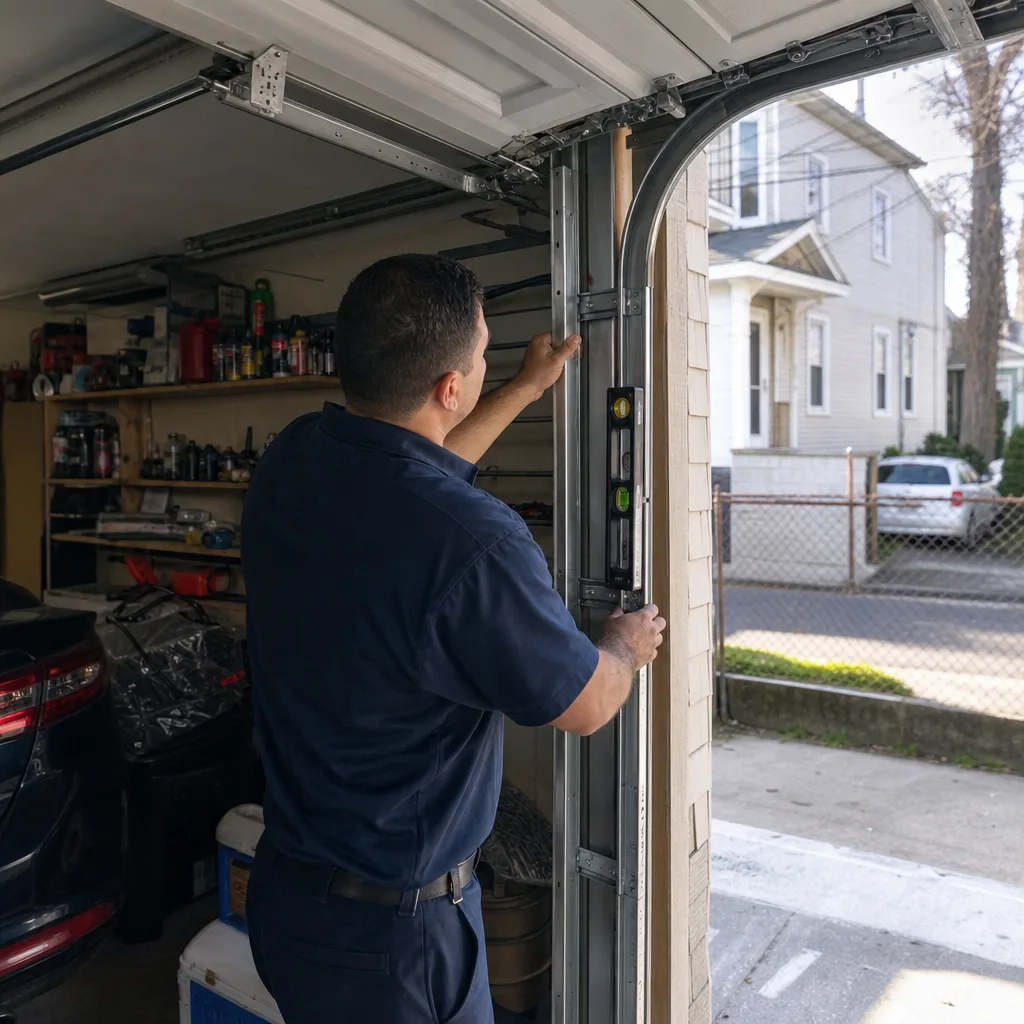
Last updated November 15, 2026
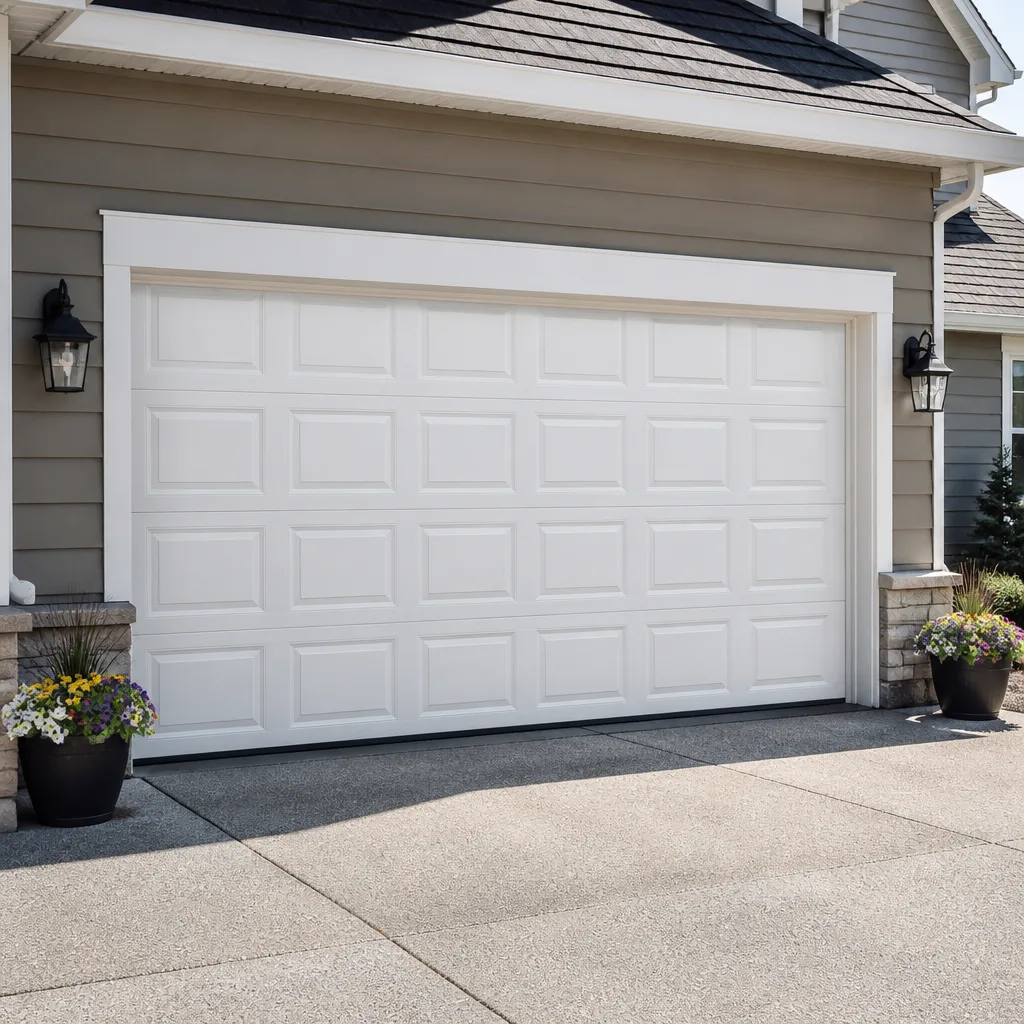 Raised-panel steel
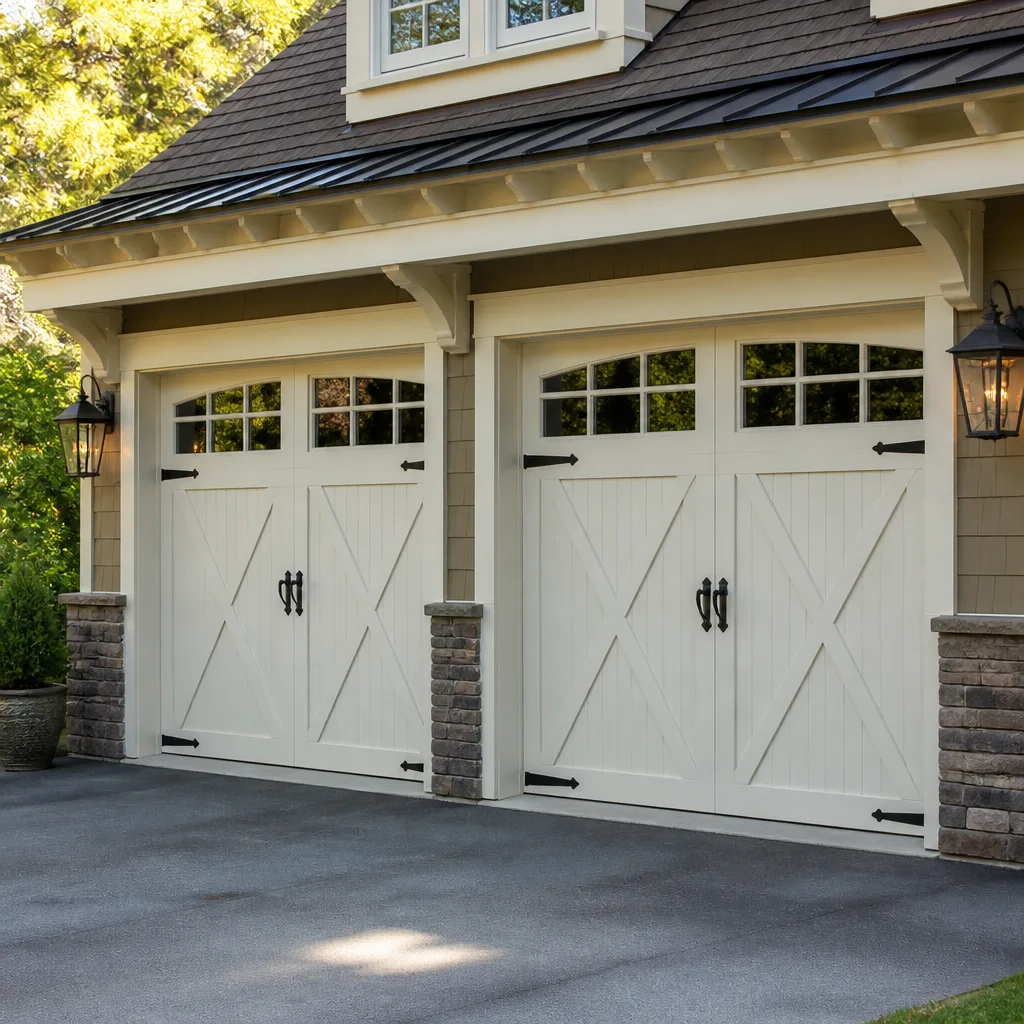 Carriage house
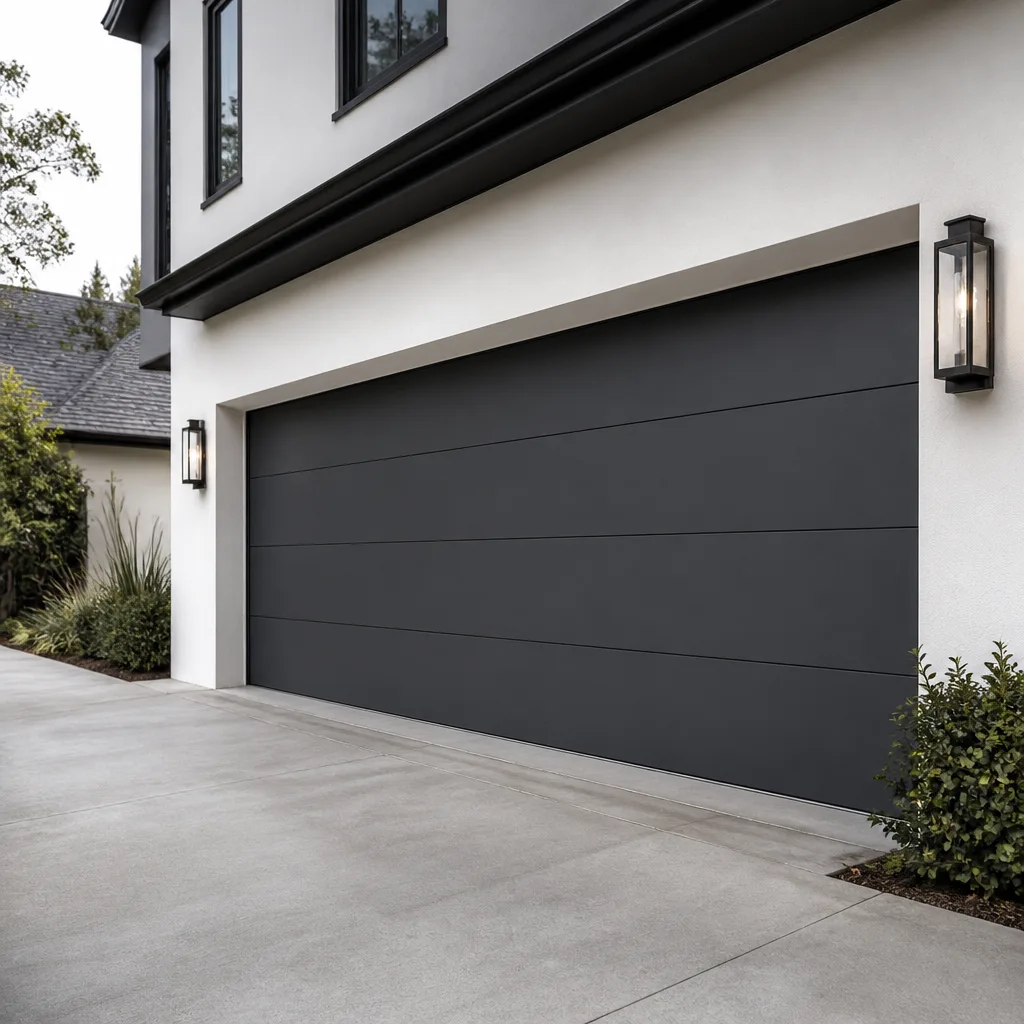 Modern flush
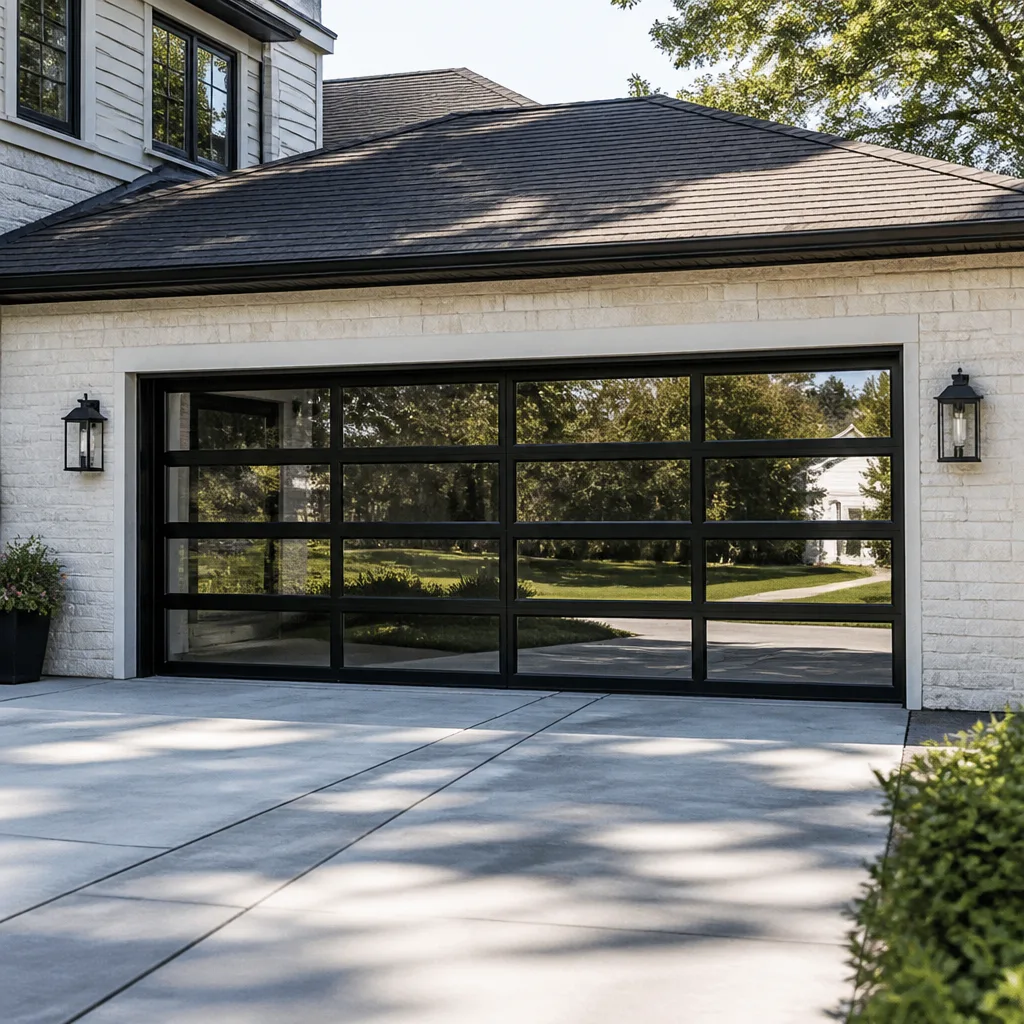 Full-view glass
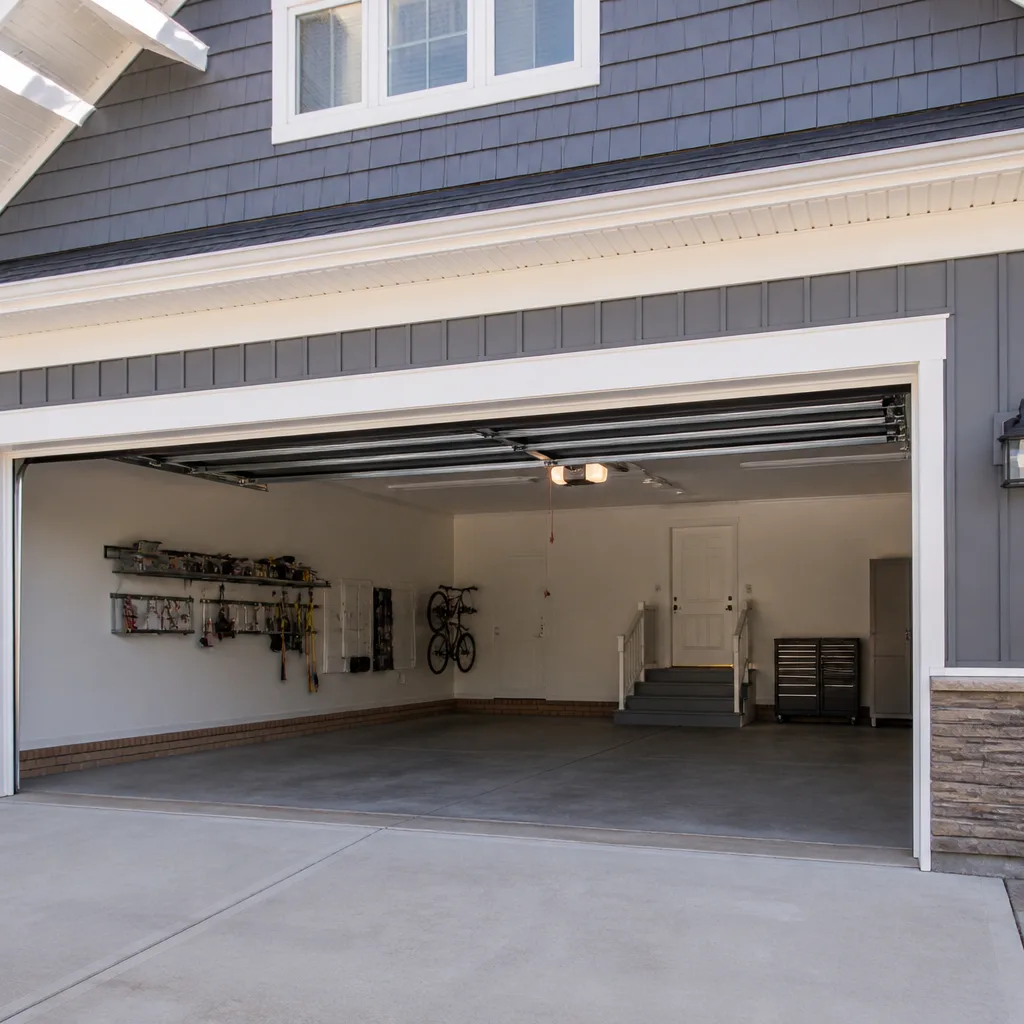 LiftMaster openers
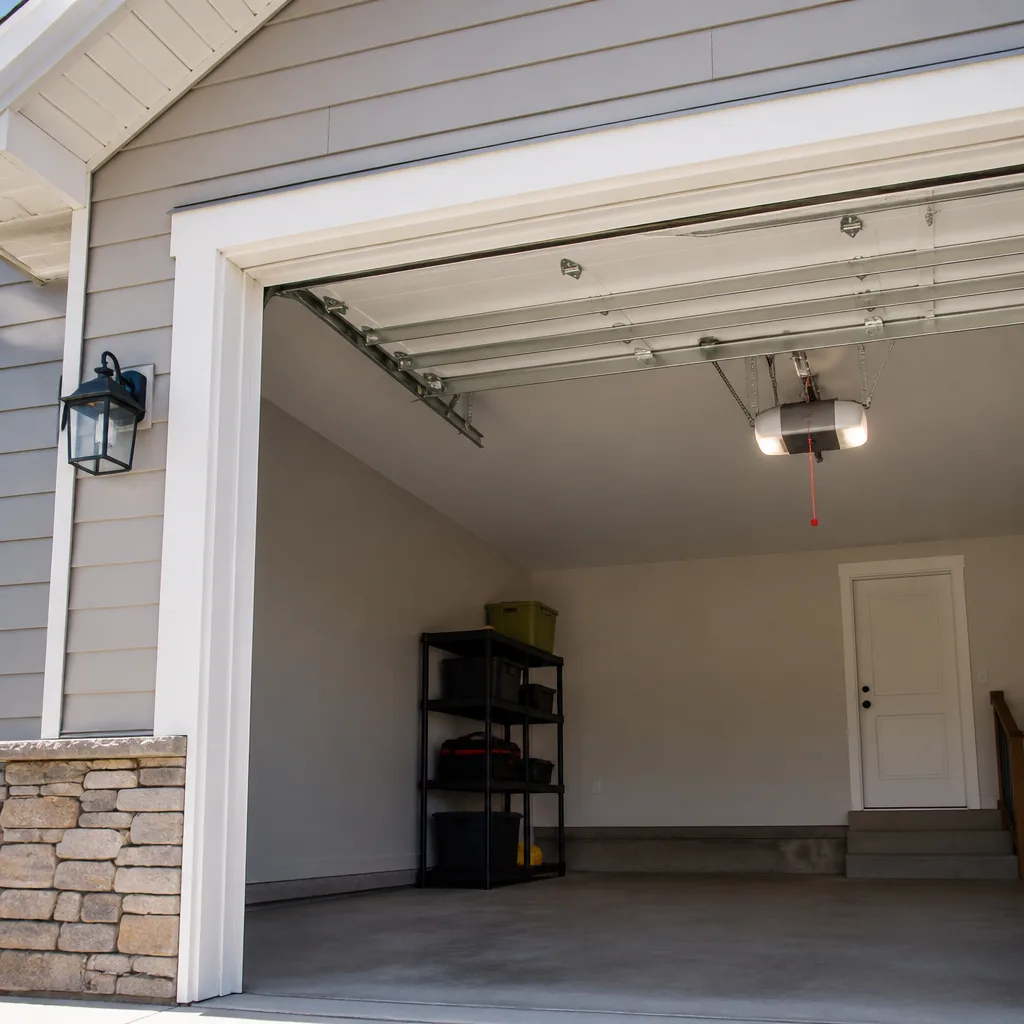 Chamberlain openers
Full 25-point door and opener safety check with every visit - springs, cables, rollers, tracks, and your LiftMaster or Chamberlain opener included
You get a price before we start. It does not change when the pro arrives.
Get your free estimateGarage Door Permits, Codes & Inspections in Paterson, NJ: What You Need to Know
If a contractor tells you a full garage door replacement in Paterson never needs a permit, they’re either wrong or they’re handing the legal risk to you. That’s the part most homeowners don’t hear until it’s too late. New Jersey’s Uniform Construction Code puts the responsibility on the property owner when unpermitted work turns up during a future sale or inspection. Not the contractor who skipped the paperwork. You. This guide walks through when a garage door project in Paterson actually triggers a permit, how the process works step by step, what the building department expects, and how to tell a compliant job from one that will haunt you at closing. It’s written for homeowners who’d rather know the rules now than discover them at the title table.
Quick Answer
In Paterson, a straight like-for-like garage door replacement (same size, same opening, same material and spring setup) usually does not require a permit, but any change to the opening’s structure, header, framing, or the door’s fire rating does. Opener-only installations generally don’t need a building permit either. When in doubt, call Paterson’s building department and ask directly – it takes five minutes and protects you for the life of the house.
Styles & brands we work with
- Raised-panel steel
- Carriage house
- Modern flush
- Full-view glass
- LiftMaster openers
- Chamberlain openers
Table of Contents
- The NJ UCC Threshold: Repair vs. Replacement vs. Alteration
- What Paterson’s Building Department Actually Requires
- Opener Installation: Where the Permit Line Usually Falls
- How Unpermitted Work Surfaces at Sale in Passaic County
- Fire-Rated Doors for Attached Garages Under NJ Code
- Who Pulls the Permit in NJ? Contractor, Homeowner, or Both
- HIC Registration: What It Means for the Contractor You Hire
- What an Inspection Day Actually Looks Like
The NJ UCC Threshold: Repair vs. Replacement vs. Alteration
New Jersey’s Uniform Construction Code draws its permit lines around “construction,” “alteration,” “repair,” and “replacement,” and garage doors land in a gray zone that gets misapplied in both directions. A repair keeps the existing assembly in place – new springs, new rollers, new cables, a rebuilt opener. A replacement swaps the full unit. An alteration changes the shape, size, or structural character of the opening itself. Those three categories carry different requirements, and a contractor who treats them all the same is going to give you bad advice. Here’s how the distinctions shake out in practice.
- Like-for-like replacement: same dimensions, same track configuration, same header location. Usually no permit, though the fire-rating question below can change that.
- Size change: widening, heightening, or converting a single door to a double. Alteration. Permit and inspection required.
- Header or framing work: cutting, sistering, or reinforcing the wall above the opening. Structural alteration. Permit required, often with an engineer’s stamp.
- Track relocation or new mounting: moving tracks, changing the vertical/horizontal radius, or re-hanging the door on a different wall plane. This is treated as an alteration in most townships.
- Spring and hardware repair: torsion springs, extension springs, cables, drums, hinges, rollers. Pure repair. No permit.
Where it goes wrong: some contractors call a full replacement “repair” to avoid paperwork, while others over-classify a spring swap as an alteration and scare homeowners into a costly permit process they didn’t need. Neither is helpful. The honest answer in Paterson is to match the classification to the actual scope of work and to ask the building department to confirm the call in writing if there’s any ambiguity. For a straight repair with no structural change, skip the permit conversation entirely and get the door back to safe operation. If you’re weighing repair against replacement, our garage door repair team can walk you through which category your job falls into before any paperwork starts.
What Paterson’s Building Department Actually Requires
When a permit is required for garage door work in Paterson, the process follows the same construction permit path used for other residential alterations. It’s not exotic – but it’s sequential, and homeowners who try to compress it usually end up waiting longer than the people who just followed the order. Here’s how a standard residential door replacement runs when a permit applies.
- Confirm the classification with the building department. Call Paterson’s construction office and describe the scope. Ask them to confirm which permit form applies and whether any plan review is needed for your specific change.
- Submit the permit application. This includes the property owner’s information, contractor’s HIC registration number, scope of work, and – depending on the change – a sketch or drawing of the opening dimensions.
- Pay the permit fee. Fees scale with the declared value of the work. The building department will tell you the exact figure when the application is processed.
- Schedule the installation. Once the permit is issued, the door can be ordered and the install scheduled. Opening the wall before a permit is in hand is the single most common mistake we see.
- Request the inspection. After installation, call the construction office to schedule the final inspection. The door needs to be in its finished, operational state – tracks level, springs set, opener aligned.
- Get the signed-off permit. Keep the approved inspection card with your home records. This is the document that matters at resale.
Opener-only work almost always skips this entire sequence. A new LiftMaster or Chamberlain opener with myQ compatibility, mounted to the existing ceiling and tied to the existing door, is a swap of an appliance-grade component, not a structural change to the opening. If you’re adding a new circuit for a 240V unit or changing the outlet location, a licensed electrician handles that side and any electrical permit lives with them, not with the door installation.
Because Paterson’s housing stock is older and mixed – 19th-century wood frames in some neighborhoods, mid-century block construction in others – the physical doorway sometimes doesn’t match what the original drawings show. That’s a real reason to have the building department look before work starts on anything that touches the opening. You’ll want the inspector’s eyes on the header if there’s any chance the framing has been modified in a previous renovation.
Opener Installation: Where the Permit Line Usually Falls
Installing a new opener on an existing door is a repair-and-replace of a component, not construction, so most Paterson residential opener swaps don’t trigger a building permit. A permit typically enters the conversation only when the work touches the home’s electrical system beyond a standard plug-in or existing dedicated outlet – and from that point it becomes an electrical permit, handled by the electrician, not the door contractor.
That said, three situations are worth a phone call:
- New circuit required. Some older Paterson homes have the ceiling receptacle on a shared circuit that won’t handle a newer unit. A licensed electrician runs a new line and pulls the electrical permit.
- Structural mounting change. If the new opener needs different ceiling framing or a header bracket relocated into a different wall plane, you’re back into alteration territory and the building department should weigh in.
- Attached-garage fire separation touched. If the mounting work requires penetrating or modifying the drywall layer separating the garage from the living space, that separation is code-regulated. See the fire-rated section below.
For the drive system itself, brand-matched diagnostics matter far more than a permit. A garage door opener repair specialist who knows the LiftMaster/Chamberlain platform, or the older Genie and Raynor systems still running in lots of Passaic County homes, reads the failure correctly the first time instead of throwing parts at it. When you’re ready to install new doors and openers together, a free measure and a written price is the right starting point – not a same-day promise.
How Unpermitted Work Surfaces at Sale in Passaic County
Unpermitted garage door work tends to sit quiet for years and then appear at the worst possible moment: the buyer’s inspection, or worse, the closing table. In Passaic County it surfaces in three predictable places – the municipal certificate of continued occupancy or smoke certificate inspection, the title company’s permit search, and the home inspector’s report. Each one creates a decision point, and none of them are pleasant once a sale is in motion.
Where it shows up
- Municipal inspection: Many New Jersey towns, including Paterson, require a certificate of continued occupancy or a smoke detector/carbon monoxide certificate before a change of ownership. During that inspection, unpermitted alterations may be flagged and the town can require retroactive documentation.
- Title search: Open permits that never got a final inspection can appear as open items on the municipal lien search. An open permit is a title objection, and the deal can pause until it’s resolved.
- Home inspector: A good inspector notes the age and configuration of the door, the spring assembly, the track alignment, and the opener mounting. A brand-new door on a house whose records show no permit stands out.
What remediation typically involves: a retroactive permit application, a site inspection, and, if the work wasn’t done to code, correction of the substandard items. The permit itself is the cheap part. The expensive part is discovery – a negotiation that shifts leverage to the buyer, a credit demanded, or a delayed closing. That’s the real cost comparison. A permit upfront is a known quantity. A permit discovered mid-sale is an unknown one, negotiated by someone else, on their timeline.
This is where Lancaster Garage Door Service sees the difference in how jobs get handled. Brand-specific diagnostics and correct part selection mean the door that reaches the inspector is the door the inspector can sign off on – no re-work, no callback, no scramble to correct something six months later.
Fire-Rated Doors for Attached Garages Under NJ Code
New Jersey’s residential code requires a fire-separation membrane between an attached garage and the habitable space, and the door between the garage and the house – not the overhead garage door itself – is the component most often cited in inspection. The overhead door still matters, but in a different way: the assembly that closes the vehicle opening must not compromise the fire separation of the wall it sits in. Where a garage is attached to a dwelling, that wall and its openings are held to a fire-resistance rating; the door between the rooms is typically required to be a labeled fire-rated door, and the overhead door’s surrounding wall assembly must maintain the coded separation.
Where this trips people up:
- Upgrading a standard overhead door to a “fire-rated” assembly is not a typical residential project. Residential fire ratings for attached garages usually apply to the door between the garage and the living space, not the overhead door.
- Drywall thickness and taping in the garage ceiling and common wall matter. If a prior renovation left the drywall unsealed, patched, or missing, the door opening is not the only problem.
- Verifying compliance means looking at the label, not guessing. A fire-rated door between the garage and house carries a label from a testing body on its hinge edge. If the label is painted over or missing, the safest path is to replace the door with a labeled unit and keep the label intact.
We can’t tell you the exact rating that applies to your home without seeing it, and we don’t want to guess at a number that could differ from what your town’s inspector cites. What we can tell you is to ask Paterson’s construction office directly for the rating that applies to your specific garage configuration, especially if you’re replacing a door between an attached garage and a kitchen, mudroom, or hallway. Get the number in writing from the town, then buy the labeled door to match. That paper trail is worth more at resale than any verbal reassurance.
Who Pulls the Permit in NJ? Contractor, Homeowner, or Both
In New Jersey, the licensed contractor who performs the work is legally required to file the permit application – the homeowner cannot pull a permit for work they’ve hired someone to do. That’s a specific and often misunderstood rule. A homeowner can pull a permit for work they personally perform on their own home, but a contractor working for pay must file in their own name using their own registration. If a contractor asks you to pull the permit “to save time,” that’s a red flag, not a convenience.
What this means for you:
- The permit ties to the contractor’s HIC number, so the inspection record names the company that did the work. That’s the accountability mechanism.
- The homeowner still carries the ultimate legal responsibility for unpermitted work discovered later. Contractor registration protects you during the job; homeowner responsibility covers you after the job.
- You should receive a copy of the permit and the signed inspection card when the work is complete. Ask for both, and keep them with your home records.
- If the contractor can’t file the permit, don’t hire them. A licensed, registered contractor has no reason to avoid the paperwork on a job that legitimately needs it.
For jobs that don’t require a permit at all – spring replacement, cable work, opener repair, roller replacement – this whole conversation doesn’t apply, and the right move is to just get the part fixed. Repairs should be done properly by someone who knows the door, permit or not.
HIC Registration: What It Means for the Contractor You Hire
New Jersey requires home improvement contractors performing work on residential property to hold a Home Improvement Contractor registration with the state Division of Consumer Affairs. That registration is the baseline for legality, and it’s independent of the permit process. A contractor can be HIC-registered and still do a job that requires a permit without pulling one. And a contractor can pull a permit on work they’re not registered to perform. The two checks are separate, and you should verify both.
What to verify before the installation date:
- HIC registration status. The state maintains a public database – look up the company by name and confirm the registration is current.
- Written contract. HIC law requires a written contract on residential work above a threshold value, with specific disclosures. Any reputable installer provides one.
- We can’t tell you what the insurance figure should be – that’s a job-specific ask for your contractor – but we can tell you that you should ask for proof of liability insurance and, if they have employees, workers’ compensation coverage.
- Permit filing willingness. A contractor who gladly files the permit on a job that requires one, and honestly tells you when one isn’t needed, is a contractor who understands the code. That’s the read on competence you actually want.
One more piece: the written estimate is the price. Any line about permit filing fees should appear in the estimate before the job starts, not arrive as an invoice surprise afterwards. Ask how the contractor handles permit fees in their quote and get it in writing.
What an Inspection Day Actually Looks Like
A garage door inspection for a permitted installation is short – usually under half an hour at the property. The inspector is checking that the installed assembly matches the permitted scope of work, that the door operates safely, and that any required fire separation elements are intact and labeled. You don’t need to be present if the contractor is coordinating, but you should get the signed card regardless.
- Confirm the door and opener are fully installed before the inspection window. Springs tensioned, tracks leveled, opener mounted and tested, safety reverse functioning.
- Have the permit card visible. Paterson’s construction office requires the permit to be posted on the job site until the inspection is signed off.
- Be ready to answer scope questions. The inspector may ask whether the opening was modified, whether the header was touched, and whether the door between the garage and living space was replaced.
- Get the sign-off. The inspector signs the permit card when everything checks out. Request a copy from the contractor’s office and store it with your home’s records file.
- If corrections are needed, they’re typically minor (a missing label on a fire door, a loose arc-fault test result, a track leveling that doesn’t pass). The contractor addresses them and the inspection is re-booked.
If you need an inspection faster than the contractor’s normal scheduling, call the building department directly and ask about availability. Municipality scheduling moves on the town’s calendar, not the contractor’s.
Common Mistakes to Avoid
- Taking a contractor’s word that replacement never needs a permit. Even if a like-for-like replacement doesn’t, a run-of-the-mill generalization about “all garage door work” is wrong more often than it’s right. Confirm your specific scope with the building department.
- Letting the contractor pull the permit in the homeowner’s name. In NJ, the licensed contractor files in their own name. If they ask you to file, ask why.
- Skipping the fire-rated door check on attached garages. The door between the garage and living space is code-regulated. Replacing it with an unlabeled door is a common way to fail inspection at resale.
- Doing the work first and applying for a permit afterward. Paterson’s construction office can require corrections on the installed work, and the corrections may cost more than the permit would have.
- Forgetting to keep the signed inspection card. A signed-off permit is only useful at resale if you can produce it. Keep it with the deed, the survey, and the other permanent home records.
- Assuming a permit covers the opener too. Permits are scope-specific. If the permit says “replace overhead door,” it doesn’t cover a new opener or a new electrical circuit.
- Bypassing the HIC verification step because the estimate looked right. A low price on a job by an unregistered contractor is not a bargain. The legal exposure is yours, and it doesn’t disappear when the door looks fine.
See the difference
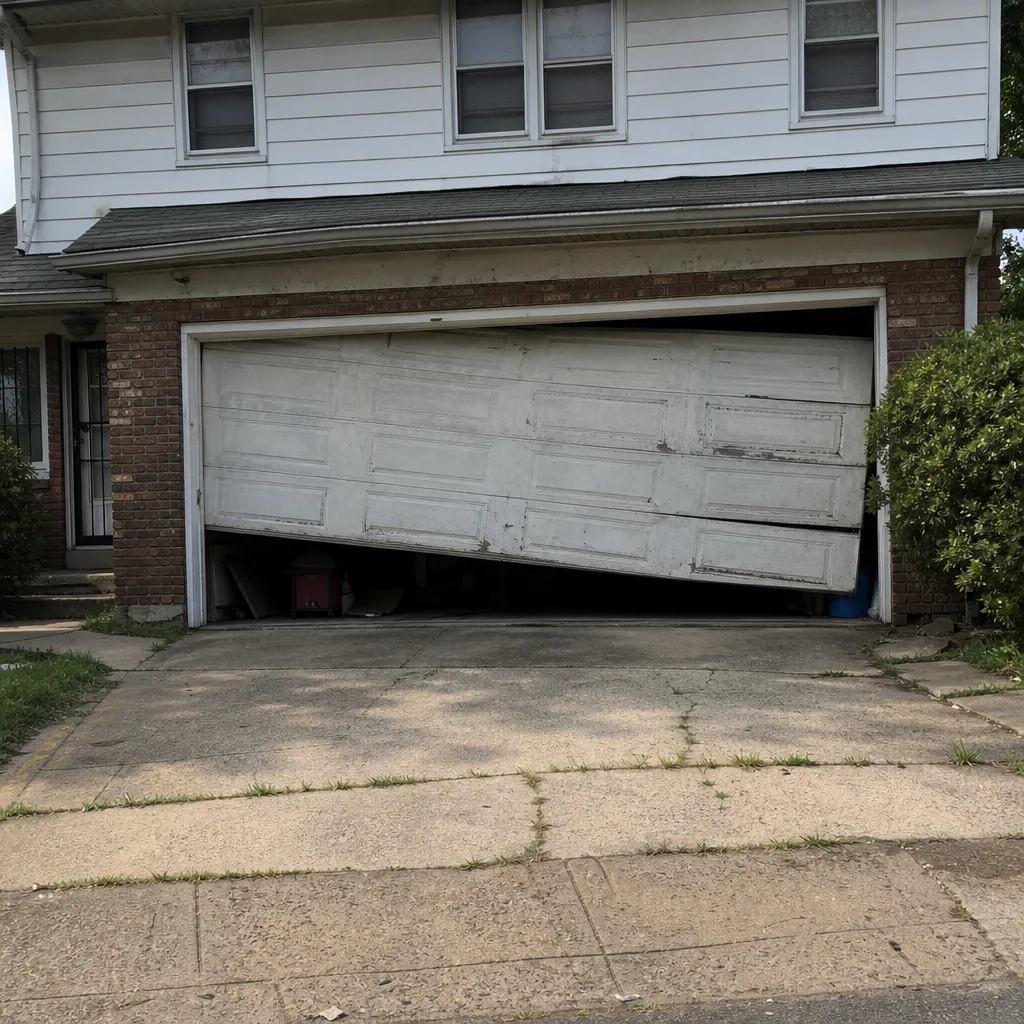 Before
 After
 Before
 After
 Before
 After
When to Call a Professional
Any work on a high-tension torsion spring, a door cable, or an opener’s drive system belongs with a trained technician – those parts store serious energy and the wrong tool or the wrong procedure can cause injury in a fraction of a second. If your door is off its track, if a spring has snapped, if the opener runs but the door doesn’t move, or if the door is sagging on one side, that’s the moment to stop operating it and get eyes on it. We also recommend a professional look before you commit to a permit-requiring project – the scope has to be right before the paperwork starts. Lancaster Garage Door Service offers free estimates in Paterson. Call (844) 902-2470. We answer 24/7. Fast dispatch from 7am to 7pm, Sunday through Friday.
Frequently Asked Questions
Probably not, if the replacement is truly like-for-like – same measurements, same opening, same spring configuration, no structural changes. If the door size, header, framing, or fire rating is changing, a permit is typically required. Call Paterson’s building department with your specific scope to confirm. And call (844) 902-2470 if you’d like a free measure and a written price before you make the call.
Usually no, when the opener is mounting to an existing door and existing ceiling framing. A permit typically enters the picture only if a new electrical circuit is required (that’s an electrical permit, pulled by the electrician) or if the fire separation between the garage and living space is being modified. Call (844) 902-2470 for a free estimate on the opener swap itself.
The homeowner is ultimately responsible under New Jersey law, even if a contractor did the work and skipped the permit. That’s the specific reason to verify that your contractor will file the permit when one is required, and to keep the signed inspection card with your home records. Call (844) 902-2470 if you want a professional to walk your door and give you an honest read on what’s needed.
The fire-rated door that applies to most attached-garage situations is the door between the garage and the living space – that one is typically required to be a labeled fire-rated door. The overhead door’s surrounding wall assembly must maintain the coded fire separation, but the overhead door itself is rarely the “fire-rated” component in a residential home. Ask Paterson’s construction office for the exact rating on your configuration and keep the labeled door intact. Call (844) 902-2470 with door-specific questions.
Only if the homeowner is doing the work themselves. If you’ve hired a contractor, the licensed contractor is required to file the permit in their own name using their HIC registration. A contractor asking the homeowner to pull the permit is a warning sign, not a favor. Call (844) 902-2470 for a free estimate and we’ll walk you through what the scope will look like before permit questions come up.
No. Spring replacement, cable work, roller and hinge replacement, opener repair – none of these are construction, alteration, or replacement in the code’s sense, so they don’t require a permit. Repairs should still be done by a trained technician given the stored energy in the spring and cable system. Call (844) 902-2470 and we’ll get a technician out for a free estimate.
The Bottom Line
In Paterson, the permit question comes down to scope. Like-for-like replacement of an existing overhead door usually doesn’t need one; alteration of the opening, structural work, or anything touching the fire separation does. The homeowner carries the legal responsibility when unpermitted work surfaces later, which is why verifying your contractor’s HIC registration, insisting on a written contract, and asking the building department to confirm your specific scope are the three habits that prevent trouble. Repairs skip all of this. Installations deserve the paperwork. And a contractor who tells you the code doesn’t apply to your job had better be able to explain exactly why. When you’re ready to move on a door or opener project in Paterson, call us for a free estimate and a written price you can rely on.
Ready to talk through the scope of your job? Call (844) 902-2470 for a free estimate. We answer 24/7. Fast dispatch from 7am to 7pm, Sunday through Friday. Our technicians have up to 14 years of experience, and we work on Raynor, LiftMaster, Chamberlain, and Genie systems every day.
Written by the team at Lancaster Garage Door Service.